The global procurement landscape for protective outerwear is currently shifting toward high-performance synthetic membranes that balance absolute waterproofing with environmental sustainability. For international buyers, identifying reliable men rain coat exporters requires a deep understanding of material science, specifically the transition from traditional PVC to eco-friendly polyurethane (PU) coatings.
This technical shift is driven by stricter European and North American regulations regarding PFCs and PVCs, forcing manufacturers to innovate in recycled polyester substrates and non-toxic coatings. The challenge for importers lies in verifying that a garment's water column rating and seam integrity are maintained even when using sustainable materials, as traditional waterproofing often relied on harmful chemicals.
This analysis explores the engineering criteria for evaluating high-end rainwear, the impact of PU coating weights on durability, and how specialized manufacturing processes ensure long-term reliability in extreme wet weather.


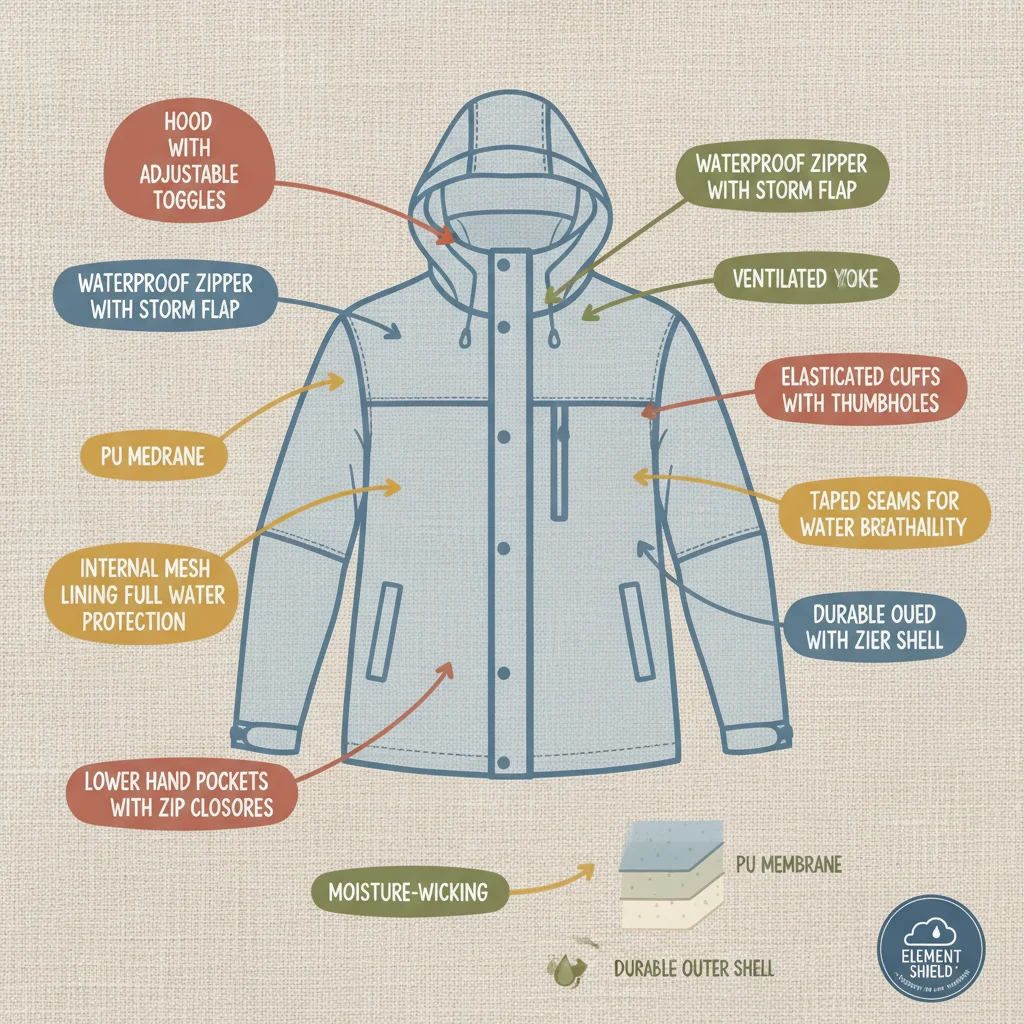
The structural integrity of professional rainwear depends on the composite relationship between the base fabric and the functional coating. Modern high-end coats typically utilize a 100% polyester knitted fabric as the substrate, which provides the necessary flexibility and tensile strength to support a polyurethane coating.
A critical technical metric is the fabric weight, often ranging between 190-200gsm. This specific density ensures that the garment is heavy enough to resist wind penetration but light enough to remain wearable. The PU coating acts as the primary hydrophobic barrier, preventing water molecules from penetrating the knit structure while maintaining basic windproof properties.
Waterproof efficiency is measured by the water column (hydrostatic pressure), which defines the maximum pressure a fabric can withstand before water leaks through. In professional-grade PU rainwear, a water column of 5000-8000 mm is standard, meaning the material can withstand significant pressure during persistent heavy rainfall without saturation.
Beyond the fabric itself, the functional design incorporates critical components such as adjustable cuffs, non-detachable hoods with drawstrings, and secure closure systems (combining zippers and push buttons). These elements are engineered to eliminate "leak points" where water typically enters the garment through gravity or wind-driven pressure.
Certification plays a vital role in validating these specifications. The OEKO-TEX Standard 100 ensures that the chemicals used in the PU coating and the base polyester are safe for human contact, while BSCI and GRS audits confirm that the manufacturing process meets global social and environmental standards.
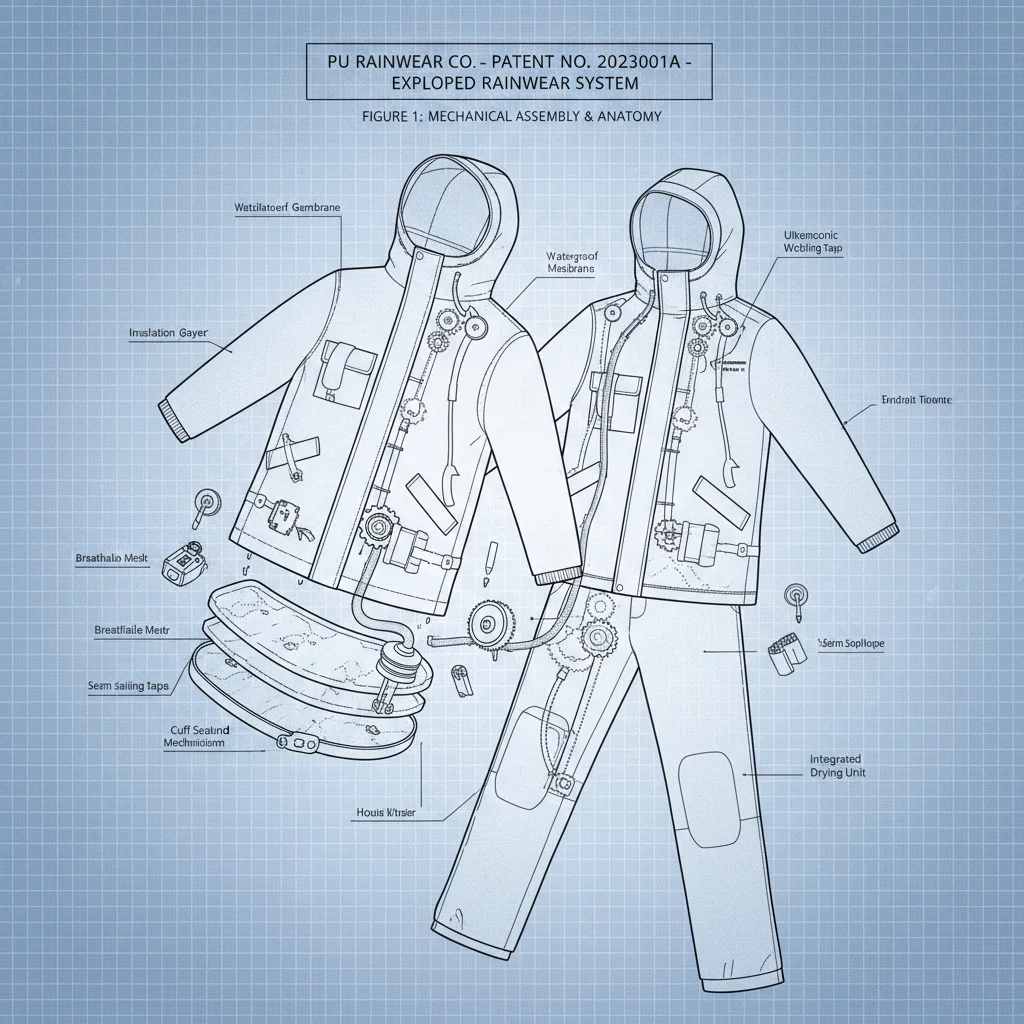
One of the most frequent failure points in low-cost rainwear is the stitched seam. Every needle puncture creates a microscopic hole through the waterproof membrane, allowing moisture to seep through via capillary action, regardless of how waterproof the main fabric is.
Quality control for these seams involves rigorous testing using hydrostatic testers and needle detectors. This ensures that no imperfections exist in the weld and that no metallic fragments remain in the fabric, which is essential for high-volume OEM/ODM exports to European markets.
Evaluating the quality of rainwear requires a multi-dimensional assessment. Buyers must look beyond the "waterproof" label and analyze the trade-off between material thickness, breathability, and durability. A heavier PU coating increases waterproofness but can reduce the garment's flexibility and breathability.
The following assessment evaluates typical PU rainwear configurations based on engineering ratings for durability, waterproof integrity, and environmental compliance, providing a benchmark for B2B procurement.
For importers targeting the Nordic markets (Sweden, Finland, Norway, Denmark), the priority is usually extreme weather resistance combined with high ethical standards. In these scenarios, buyers should prioritize GRS-certified recycled polyester and PFC-free PU coatings to meet regional environmental laws while ensuring a water column of at least 5000mm.
In contrast, corporate uniform procurement focuses on a balance of cost and durability. Here, a 190-200gsm fabric with reinforced welded seams provides the best ROI, ensuring that the gear can withstand daily industrial use without premature failure at the seams or zippers.
The industry is moving toward a circular economy, where rainwear is no longer seen as a disposable product. The integration of recycled polyester and bio-based PU coatings reduces the carbon footprint of production without sacrificing the essential waterproof and windproof functions.
The current R&D direction focuses on improving the breathability of PU coatings. While absolute waterproofing is achieved through a non-porous film, the next generation of rainwear aims to implement molecular-level venting that allows water vapor to escape while preventing liquid water from entering.
Furthermore, the adoption of OEKO-TEX Standard 100 is becoming a mandatory baseline rather than a premium feature. This shift reflects a broader market demand for transparency in the chemical supply chain, specifically regarding the removal of harmful phthalates and heavy metals from the PU coating process.
Selecting the right configuration requires an analysis of the intended operating environment. A "Light-Duty" coat is sufficient for urban commuting, whereas "High-Duty" configurations are necessary for maritime or industrial applications where continuous exposure to moisture is expected.
The following matrix outlines how different technical profiles impact the final garment performance. Buyers should match these profiles to their specific market needs to avoid over-specifying (which increases cost) or under-specifying (which leads to product failure).
It is important to note that the effectiveness of any rainwear is only as strong as its weakest point—usually the seam or the closure. Regardless of the fabric choice, welded seams remain the gold standard for professional export quality.
| Configuration Profile | Water Column | Seam Technology | Recommended Use Case |
|---|---|---|---|
| Basic Urban | 3000-5000mm | Taped Seams | Short-term city commute |
| Standard Outdoor | 5000-8000mm | Welded Seams | Daily outdoor activity |
| High-Duty Industrial | 8000mm+ | Full Welded | Industrial/Workwear |
| Eco-Premium | 5000-8000mm | Welded (GRS) | EU/North American Retail |
| Lightweight Travel | 3000-5000mm | Taped/Welded | Portable rain protection |
| Extreme Maritime | 10000mm+ | Heavy-Duty Welded | Professional Marine Use |
Polyurethane (PU) is generally more flexible, breathable, and environmentally friendly than Polyvinyl Chloride (PVC). PU coatings, especially those using recycled polyester, avoid the harmful phthalates found in many PVC products. From an engineering perspective, PU offers better drape and durability over time, whereas PVC can become brittle in cold temperatures, making PU the preferred choice for high-end men rain coat exporters.
The water column rating (e.g., 5000-8000mm) indicates the amount of water pressure a fabric can withstand before leaking. In practical terms, a 5000mm rating is sufficient for most heavy rain. However, when a user leans against a wet surface or carries a heavy backpack, the pressure at those contact points increases significantly. Higher ratings ensure that the garment remains waterproof even under these localized pressure points.
Traditional sewing involves needles that pierce the waterproof membrane, creating thousands of potential leak points. Welded seams use heat and pressure to fuse the material together, eliminating needle holes entirely. This creates a continuous hydrophobic barrier across the entire garment, which is essential for maintaining the rated water column performance at the seams, where most failures typically occur.
Buyers should request OEKO-TEX Standard 100 to ensure chemical safety, and GRS (Global Recycled Standard) if they are sourcing sustainable materials. Additionally, BSCI audit reports provide evidence of social compliance. For technical validation, third-party test reports from companies like SGS, BV, or ITS regarding the hydrostatic pressure and tensile strength of the fabric are highly recommended.
Yes, professional exporters offer extensive OEM/ODM services, including customized logos via screen or transfer printing, adjustments to the fabric weight (gsm), and modifications to the functional design (such as adding specific pockets or adjusting the silhouette). Most manufacturers require a Minimum Order Quantity (MOQ), typically around 800 pieces per color, to optimize production lines and material sourcing.
Durability can be evaluated by checking the fabric weight and the quality of the PU bond. A coating of 190-200gsm typically offers a good balance of flexibility and wear resistance. Buyers should also perform a "flex test" to ensure the coating does not crack when folded and verify that the welded seams do not peel under tension using a tension tester.
The transition toward sustainable, high-performance PU rainwear marks a critical evolution in the textile industry. By combining recycled polyester substrates with PFC-free coatings and welded seam technology, manufacturers can now deliver garments that meet both stringent environmental regulations and extreme performance requirements. The key for procurement professionals is to move beyond basic labels and evaluate the specific interplay between fabric weight, hydrostatic pressure, and seam integrity.
Ultimately, the reliability of protective outerwear depends on a rigorous quality control system—integrating hydrostatic testing, tension analysis, and international certifications. For those seeking professional-grade solutions, exploring specialized catalogs such as the one found at www.jjpuraincoat.com can provide insights into how fashion-forward design is successfully integrated with industrial-grade waterproofing.
Hit enter to search or ESC to close