The global protective outerwear market is currently witnessing a significant transition toward sustainable material science, particularly in the procurement processes involving a professional men rain coat Factory. As regulatory pressures regarding PFAS and PFCs increase in European and North American markets, manufacturers are forced to re-evaluate the chemistry of water-repellent coatings to balance absolute waterproofing with environmental safety.
This shift is not merely an aesthetic change but a complex engineering challenge. The industry must now integrate recycled polymers without compromising the hydrostatic head pressure or the breathability required for high-performance gear. For B2B buyers, identifying a production partner that can maintain Oeko-Tex 100 standards while scaling annual output is critical to maintaining a competitive edge in the sustainable apparel sector.
This analysis examines the technical intersection of PU coating technologies and eco-friendly textile manufacturing. By exploring the operational standards of a modern men rain coat Factory, we provide a framework for evaluating manufacturing capabilities against evolving global safety and sustainability certifications.


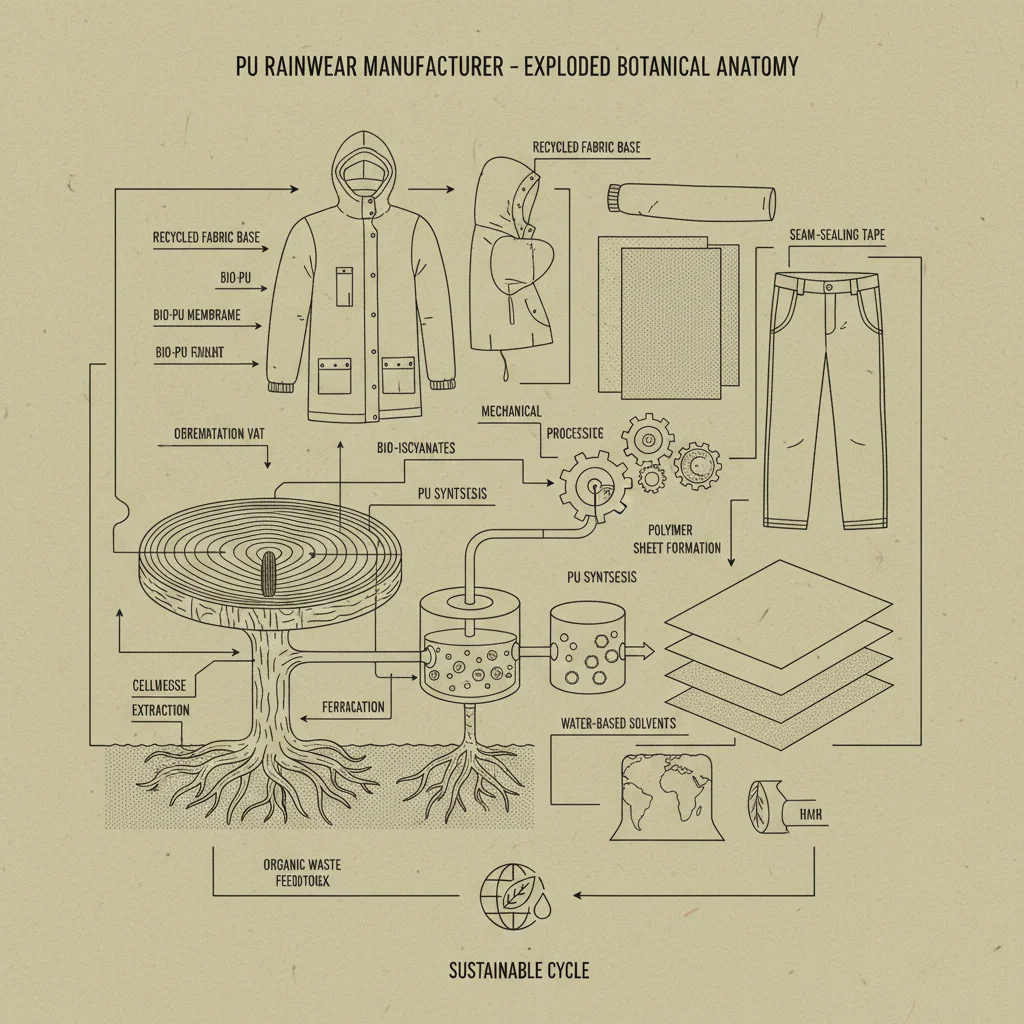
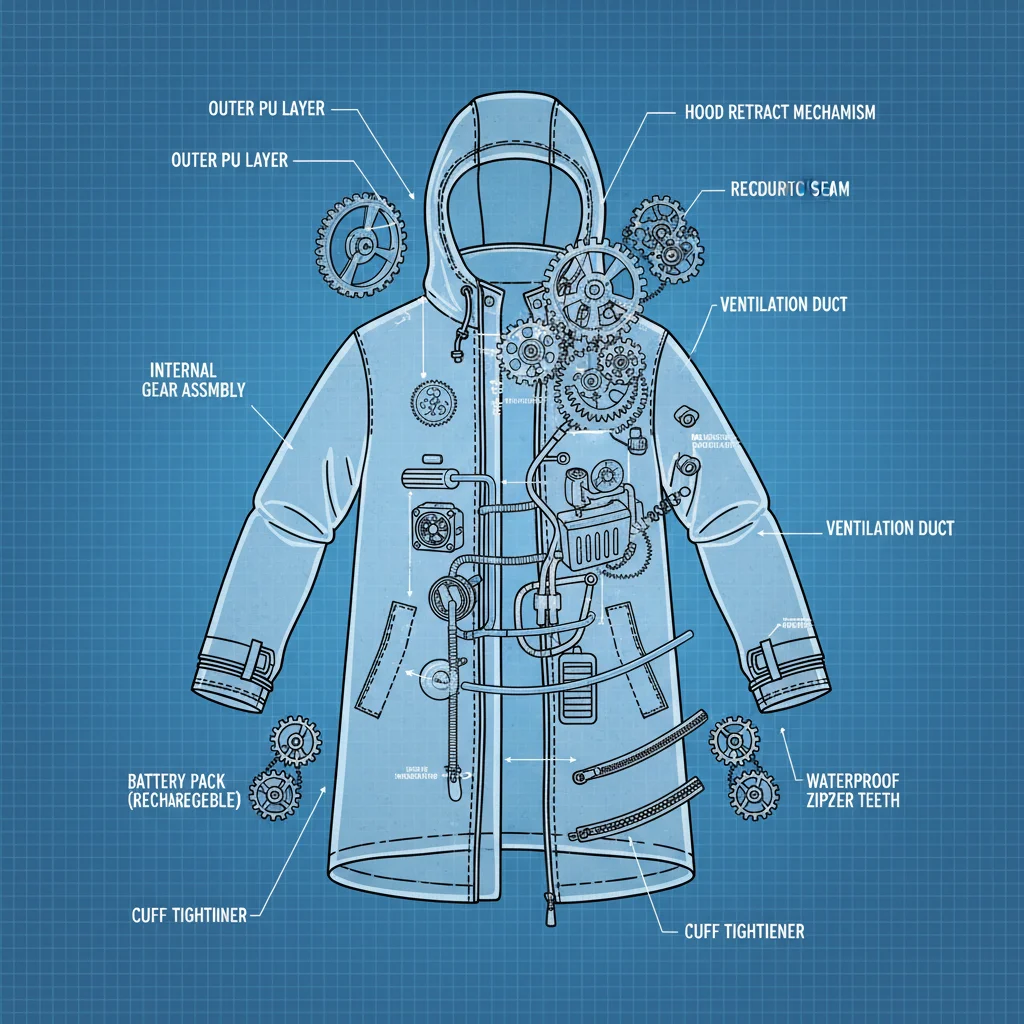
High-performance rainwear relies on a multi-layered architecture where a base textile—often knitted or woven polyester—is bonded with a polyurethane (PU) coating. This chemical barrier prevents liquid water penetration while allowing a managed degree of vapor transmission. In a professional manufacturing environment, the precision of the PU application determines the garment's lifespan and its resistance to hydrostatic pressure.
The integration of bonded seams is the second critical pillar of this architecture. Without thermally welded or taped seams, the needle holes created during the sewing process become primary failure points for water ingress. Engineering these bonds requires strict temperature control and pressure application to ensure the seam remains watertight under heavy downpours.
Technical specifications for rainwear are measured by GSM (grams per square meter) and hydrostatic head ratings. For instance, a polyester knitted fabric with a 100% PU coating typically falls within the 190-200gsm range, providing a robust balance between weight and durability. The density of the fabric directly impacts the garment's ability to withstand mechanical abrasion in industrial or outdoor settings.
The interior lining plays a vital role in the user's thermal comfort and skin safety. The use of 100% cotton single jersey lining is a strategic engineering choice to prevent skin irritation and manage moisture wicking from the wearer's body. This contrast between the impermeable outer shell and the absorbent inner lining is what defines a high-quality technical garment.
Certification standards such as Oeko-Tex 100 serve as the benchmark for chemical safety. These standards ensure that no harmful substances are present in the dyes, threads, or coatings. For a manufacturer, maintaining these certifications involves rigorous third-party testing via entities like SGS, BV, or ITS to validate the non-toxic nature of the production cycle.
The most pressing technical challenge for any men rain coat Factory today is the elimination of perfluorinated chemicals (PFCs). Traditionally, PFCs provided the highest level of oil and water repellency, but their persistence in the environment has led to strict global bans. The transition to PFC-free compositions requires a fundamental change in the chemical bonding of the water-repellent finish.
This evolution toward "Green Waterproofing" creates a trade-off between extreme performance and environmental compliance. While early PFC-free alternatives showed slightly lower oil repellency, recent advancements in bio-based polymers and improved PU formulation have narrowed this gap, making sustainable rainwear viable for professional-grade applications.
Evaluating different coating technologies requires a normalized assessment of multiple performance vectors. When comparing standard polyester coatings against recycled PU-coated systems, the focus shifts from simple water resistance to a comprehensive sustainability-to-performance ratio.
The following data represents a normalized engineering assessment of five common industry configurations, measuring their relative scores in durability, environmental safety, and waterproofing efficiency.
For international brands, the transition from design to bulk production involves complex OEM/ODM workflows. A reliable manufacturing partner must integrate a production management system that ensures transparency from fabric sourcing to final shipment. Key milestones include the provision of free samples for fit verification and the implementation of screen or transfer printing for custom branding.
The typical lead time for high-volume orders ranges between 30 to 90 days, depending on the complexity of the customization and the stability of the raw material supply chain. Integrating a professional men rain coat Factory into the supply chain requires rigorous auditing of certifications like BSCI and GRS to ensure ethical labor and sustainable material tracking.
The industry is moving toward a "circular economy" model where rainwear can be fully recycled at the end of its lifecycle. Current R&D is focused on biodegradable PU coatings that maintain high hydrostatic resistance during use but decompose safely in industrial composting environments. This requires a shift in the molecular structure of the polyurethane to introduce hydrolyzable bonds.
Another emerging trend is the use of smart textiles that can adapt their breathability based on the external environment. By incorporating moisture-sensitive polymers, the fabric could theoretically "open" its pores as the wearer's body temperature rises, reducing the reliance on traditional underarm vents.
Furthermore, the integration of recycled polyester from ocean plastic is becoming a primary marketing and technical driver. The engineering challenge here is removing impurities from ocean-recovered plastic to ensure the resulting yarn does not create weak points in the woven fabric, which would otherwise compromise the effectiveness of the waterproof coating.
Selecting the right manufacturing configuration depends on the target market's requirements for durability, safety, and ecological footprint. B2B buyers must weigh the cost of certification against the potential market access in strictly regulated regions like Scandinavia or Germany.
The following matrix provides a framework for comparing different production profiles based on industry baselines and high-duty requirements.
By aligning the configuration type with the specific application profile, procurement managers can optimize their investment return and ensure product longevity.
| Configuration Type | Material Spec | Safety Standard | Recommended Use Case |
|---|---|---|---|
| Industry Baseline | Standard Polyester | Basic Waterproof | General Consumer Use |
| Eco-Standard | Recycled Poly + PU | GRS Certified | EU Retail Markets |
| High-Duty Profile | Heavy-Duty PU (200gsm) | Bonded Seams | Industrial Workwear |
| Safety-First Profile | PFC-Free + Reflectors | Oeko-Tex 100 | Children/Safety Gear |
| Premium Technical | Recycled Poly + Bio-PU | BSCI / GRS | High-End Outdoor Gear |
| Custom OEM Profile | Bespoke Material Blend | Custom Audit | Brand-Specific Lines |
Oeko-Tex 100 certification ensures that every component of the garment—including the PU coating, dyes, and sewing threads—is tested for harmful substances. This is critical for rainwear, as the waterproof coatings can sometimes contain volatile organic compounds (VOCs) or phthalates. For the wearer, this means the fabric is safe for prolonged skin contact, reducing the risk of allergic reactions or chemical irritation.
Recycled polyester can have slight differences in surface tension and purity compared to virgin polyester. In a professional factory, this requires the adjustment of the PU coating parameters to ensure a strong molecular bond between the coating and the fiber. When processed correctly, recycled polyester provides identical waterproof performance while significantly reducing the carbon footprint of the production cycle.
PFCs (perfluorinated chemicals) are persistent organic pollutants that do not break down in the environment and can accumulate in human tissue. Due to their toxicity, global regulations (such as REACH in the EU) are phasing them out. PFC-free alternatives use different chemical structures to achieve water repellency, ensuring the product is environmentally sustainable without sacrificing the core function of keeping the user dry.
Standard sewing creates thousands of tiny punctures in the waterproof PU layer. Bonded seams use heat and pressure (or waterproof tape) to seal these holes, creating a continuous waterproof barrier across the entire garment. This is the primary differentiator between "water-resistant" clothing and truly "waterproof" gear capable of withstanding heavy rain over extended periods.
Capacity should be evaluated not just by annual output (e.g., 500,000 pieces), but by the factory's ability to maintain quality control across that volume. Buyers should look for internal testing equipment like hydrostatic testers, tension testers, and needle detectors. Furthermore, certifications like BSCI and GRS provide third-party validation of the factory's operational and ethical standards.
For customized OEM orders, the lead time typically ranges from 30 to 90 days, which includes fabric sourcing, sample approval, and bulk production. Minimum Order Quantities (MOQ) often vary by color, with typical professional factories requiring around 800 pieces per color to optimize the production line and material waste. This ensures cost-efficiency while maintaining high quality standards.
The shift toward PFC-free and recycled materials is no longer optional for manufacturers aiming to serve the European and North American markets. The engineering success of a modern garment depends on the seamless integration of high-performance PU coatings with eco-certified textiles. By prioritizing Oeko-Tex 100 and GRS standards, brands can ensure that their products meet both the functional demands of the user and the ethical demands of the global market.
For procurement professionals, the key to success lies in partnering with a transparent men rain coat Factory that can demonstrate a verifiable commitment to sustainability through rigorous third-party audits and advanced material science. This approach minimizes supply chain risk and maximizes the long-term value of the product line.
Hit enter to search or ESC to close