Navigating Trends and Challenges in Modern Pu Raincoat Manufacturing

  • home
  • News
  • Top blog
  • Navigating Trends and Challenges in Modern Pu Raincoat Manufacturing
0%

Table of Contents

To be honest, this pu raincoat Manufacturer thing... it's been a whirlwind lately. Everyone's chasing 'high-performance', 'eco-friendly', and 'lightweight'. Seems like yesterday we were all happy with just keeping dry, huh? Now, it's all about breathability, tear resistance, UV protection... the list goes on. I've been seeing a lot of TPU blends being pushed, which, okay, they're good. But the smell… have you noticed that new plastic smell? Some of them are just overpowering. Makes the whole job site reek for a week. Anyway, I think the biggest trend is definitely moving away from just PVC, trying to find things that don’t feel like you’re wrapping yourself in a garbage bag.

The designs… that’s where things get tricky. People always want to over-engineer. 'Let's add a hood with three adjustments! A storm flap with magnetic closures!' Strangely, the simpler ones almost always perform better. I encountered this at a factory in Ningbo last time, they'd designed this fancy articulated sleeve, thinking it would improve movement. Turns out, it just created more points of failure. Welds broke, fabric bunched up… a nightmare to repair in the field. I always say, a good raincoat should be easy to fix with a needle and thread.

The materials, that's the core of it, isn't it? We're using a lot of 70D ripstop nylon as a base these days, feels good to the touch, surprisingly durable. And then layering it with different PU coatings – some thicker for abrasion resistance, others thinner for flexibility. The quality of the PU, though... that’s critical. You get the cheap stuff, it cracks and peels after a few months. I had a guy show me a raincoat from a discount store, the coating was flaking off like sunburned skin. Pathetic. We also use some recycled polyester now, which is good, but the color consistency can be a pain.
pu raincoat Manufacturer

Industry Trends and Design Pitfalls

pu raincoat Manufacturer

We’ve seen a huge push for sustainable materials, which is great. But, honestly, some of these bio-based PU coatings just don't hold up under heavy use. They degrade faster, especially with constant exposure to UV. We're constantly balancing environmental concerns with practical durability. The whole 'fast fashion' mentality is creeping into rainwear, which is a problem. People want something cheap and disposable. It's a race to the bottom, really.

And the designs? Don’t even get me started on the integrated backpack systems. They look good on paper, but try hauling a full toolbox around in one of those things all day. It's a backache waiting to happen.

Material Selection and On-Site Handling

The PU itself… it’s all about the durometer and the elongation. Softer PU feels nicer against the skin, but it's less resistant to abrasion. Harder PU is tougher, but it can crack in cold weather. Finding the right balance is key. We use a lot of different additives, too – UV stabilizers, anti-microbial agents, flame retardants. Each one adds cost, but sometimes it's necessary. Handling the materials… that’s where experience comes in. You can tell a good roll of fabric just by how it feels. The weight, the drape, the way it unrolls… it’s subtle stuff, but it matters. And the smell… like I said, some of these new materials have a really strong odor. You need good ventilation when you’re working with them.

We've started using some interesting new coatings lately - some with a ceramic nano-particle infusion. They claim it increases abrasion resistance by like, 30%. I'm skeptical, but initial tests are promising. Still, nothing beats a good, thick layer of tried-and-true PU for sheer durability.

Getting the right adhesive is also surprisingly crucial. It has to bond to the nylon and the PU, and it has to withstand constant flexing and exposure to moisture. We tried a water-based adhesive last year, and it just delaminated after a few weeks. Back to solvent-based, unfortunately.

Testing and Real-World Application

Lab tests are fine, don't get me wrong. Water column tests, tear strength tests, abrasion resistance tests… they give you a baseline. But nothing beats real-world testing. We send samples out to construction crews, to fishermen, to park rangers… people who actually use these things in harsh conditions. I once had a guy call me up from Alaska, said the seams were splitting after a week. Turned out, they were using it while ice fishing, and the saltwater was getting into the seams. Lesson learned.

We also do our own in-house testing. We spray the raincoats with a hose, beat them with hammers, drag them across concrete… you name it. I even have a machine that simulates years of UV exposure in a matter of days. It’s brutal.

The biggest surprise? How people actually use these things. We designed a raincoat with a built-in phone pocket, thinking people would love it. Turns out, most guys just stuff their phones in their work boots. Go figure.

Advantages, Disadvantages, and Customization

The advantage of a good PU raincoat is simple: it keeps you dry. And a dry worker is a happy worker, and a happy worker is a productive worker. It's as simple as that. They're relatively lightweight, they're durable, and they’re relatively affordable. But the disadvantages… well, they can be stuffy. Breathability is always a challenge. And some of the cheaper ones can have a really plasticky feel.

Customization is where things get interesting. We had a mining company ask us to add reflective tape in a specific pattern for safety reasons. We've done custom colors for construction companies, logos for oil rigs… even a full camo pattern for a wildlife research team. That Shenzhen guy I mentioned earlier… he wanted a port sewn into the sleeve to charge his phone. It sounded crazy, but we did it.

PU Raincoat Manufacturer Performance Metrics

A Customer Story: The Debacle

Last month, that small boss in Shenzhen who makes smart home devices insisted on changing the interface to . He was convinced it was the future, and he wanted his workers to be able to charge their phones on the go, directly from their raincoats. We warned him it would compromise the waterproof seal, but he wouldn't listen. He said, "It's a small risk for a big reward!"

Two weeks later, he called us back, furious. Apparently, the first rainstorm short-circuited half of his team’s phones. He had to replace a dozen smartphones. He’d learned his lesson. The seamstress had struggled with fitting the connector, and the waterproofing was a disaster.

He ended up going back to the old-fashioned way – a waterproof pocket. Sometimes, the simplest solutions are the best. It was a costly lesson, but it’s a story we tell around the factory now.

Performance Metrics and Comparative Analysis

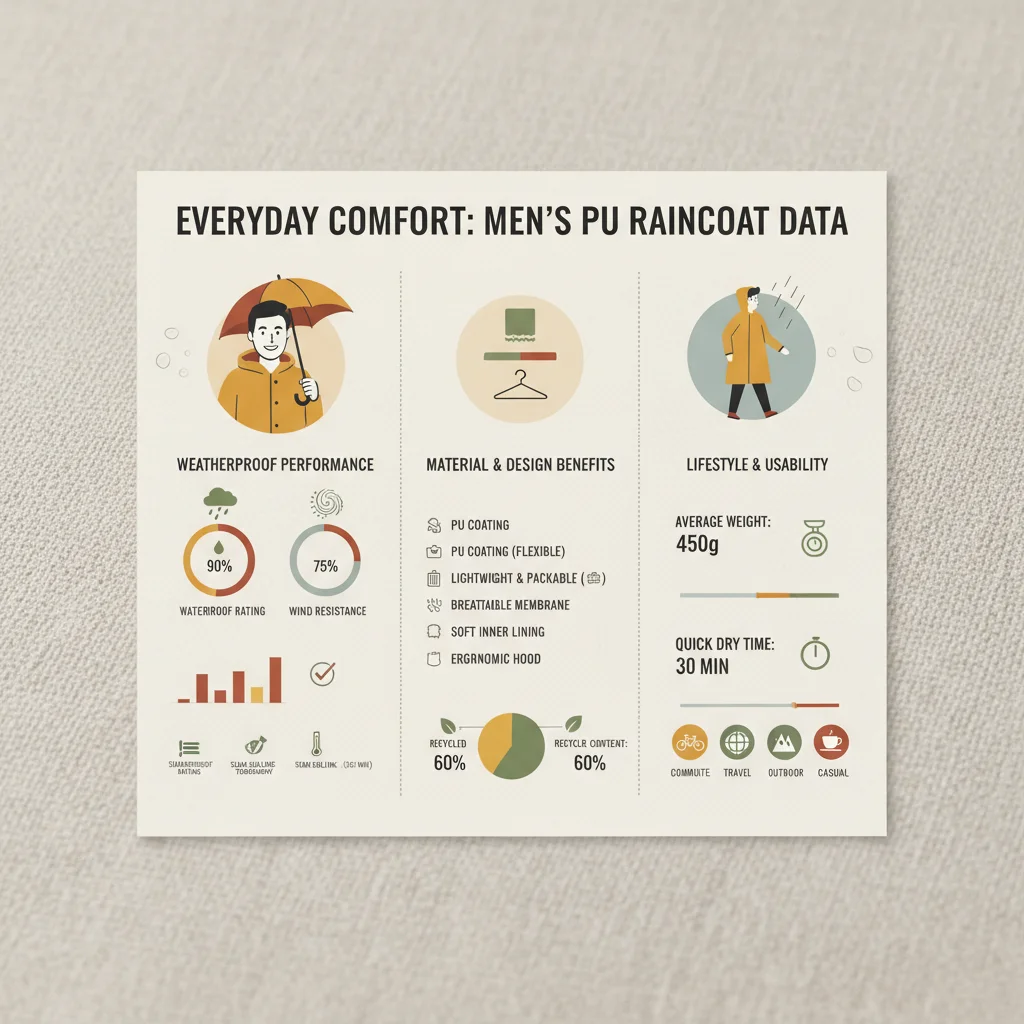
We track a lot of data. Water resistance (measured in mm of water column), tear strength (measured in Newtons), abrasion resistance (measured in cycles before failure), and UV degradation (measured in hours of exposure). We also measure weight, breathability (MVTR), and cost per unit. It's all in a spreadsheet, of course.

We constantly compare different PU formulations, different nylon deniers, different seam sealing methods. It’s a never-ending process of optimization. We try to stay ahead of the curve, but it's hard. New materials and technologies are coming out all the time.

We also analyze competitor products. We buy samples, tear them apart, and see what makes them tick. It's not always pretty, but it's necessary.

The Final Verdict: From Design to Deployment

Ultimately, whether this thing works or not, the worker will know the moment he tightens the hood over his head and the rain starts coming down. All the lab tests, all the fancy materials, all the clever designs… they don’t matter if it doesn't keep you dry and comfortable. That's the bottom line.

I think the future of pu raincoat Manufacturer is about finding that sweet spot between performance, sustainability, and cost. It's about making a product that’s not just functional, but also responsible. And it’s about listening to the people who actually use it. They're the ones who will tell you what really works.

FAQS

What’s the difference between PU and PVC raincoats?

That's a common question. PVC is cheaper, stiffer, and less breathable. It also contains chlorine, which isn't great for the environment. PU is more flexible, more breathable, and more eco-friendly, though it can be more expensive. Honestly, you get what you pay for. A good PU raincoat will last longer and be much more comfortable to wear.

How important is seam sealing?

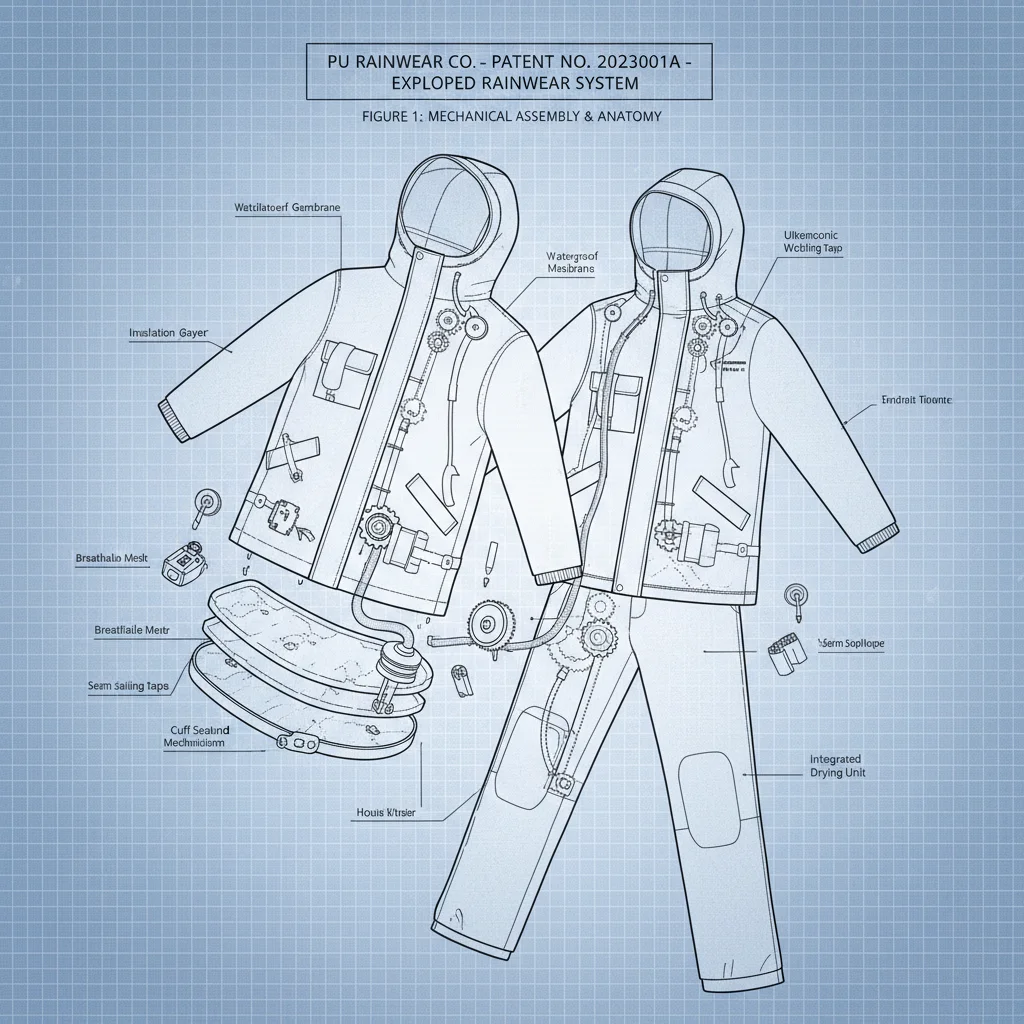
Crucial. Absolutely crucial. If the seams aren’t properly sealed, water will leak through, no matter how waterproof the fabric is. We use a combination of heat-sealing and seam tape. It's a tedious process, but it's worth it. We even do a water test on every single raincoat to make sure the seams are holding.

What does "breathability" actually mean?

Breathability refers to how well the fabric allows moisture vapor to escape. Sweat, basically. A non-breathable raincoat will trap moisture inside, making you feel clammy and uncomfortable. We measure breathability using a test called MVTR (Moisture Vapor Transmission Rate). Higher numbers are better, but it's still a trade-off with waterproofness.

Are there any raincoats that are completely waterproof?

Technically, no. "Waterproof" is a bit of a misnomer. All materials will eventually allow some water to penetrate, especially with prolonged exposure and wear. We talk about "water resistance," and aim for a high water column rating. But even the best raincoat will eventually fail if you’re submerged in water for long enough.

Can I customize a raincoat with my company logo?

Absolutely! We offer custom printing and embroidery services. We can put your logo, your company name, or whatever you want on the raincoat. We've done everything from small logos to full-color designs. There’s a minimum order quantity, of course, but we’re happy to discuss your specific needs.

How do I care for my PU raincoat to make it last longer?

Simple: wash it gently with mild soap and water. Avoid harsh detergents or bleach. Don't put it in the dryer! Hang it up to air dry. And store it in a cool, dry place. A little bit of care will go a long way. Also, re-proofing it every year or so can help maintain its water resistance.

Conclusion

So, there you have it. pu raincoat Manufacturer isn’t just about picking a fabric and slapping a hood on it. It's a complex process involving material science, design engineering, rigorous testing, and a healthy dose of real-world experience. We've seen trends come and go, materials rise and fall, and countless design iterations. But the core principle remains the same: keep people dry and comfortable.

Looking ahead, I think we'll see even more emphasis on sustainability and performance. More bio-based materials, more advanced coatings, and more intelligent designs. But ultimately, the proof is in the pudding. Visit our website at pu raincoat Manufacturer to learn more and discuss your specific requirements.
Leave Your Message

If you are interested in our products, you can choose to leave your information here, and we will be in touch with you shortly.