Look, the pu raincoat market... it's buzzing right now, honestly. Everyone's chasing 'sustainable', 'lightweight', 'durable'. It's a bit of a circus. Seems like yesterday we were all about PVC, and now it's all PU this and recycled that.
The demand’s mainly coming from the East, obviously – China, Vietnam, India – but even Europe and the States are looking for better options. Everyone's getting hit with stricter environmental regs, you know? And folks are realizing those cheap, thin raincoats just don't cut it anymore, especially if you're working outdoors all day.
It’s not just about the raincoat itself either. It's the whole supply chain. Getting consistent quality, especially with the PU film, that's the real headache. You think you’ve got a good supplier, then suddenly a batch comes in and it's… off. The texture's wrong, the waterproofing's weaker. Nightmare fuel, I tell you.
The Current Landscape of pu raincoat exporters
To be honest, the biggest shift I've seen is the pressure on exporters to deliver quickly. Everyone wants 'just-in-time' delivery, which is fine in theory, but it puts a huge strain on the whole system. You need suppliers who can guarantee consistent quality and volume. And finding those guys? That's like finding a needle in a haystack. We are talking about a market dominated by Chinese exporters, with increasing competition from Vietnam and, surprisingly, a few ambitious Turkish companies.
There's also a growing trend towards specialized raincoats – for construction workers, fishermen, motorcyclists, even dog walkers! Each niche has its own requirements. And that throws a wrench into economies of scale, doesn’t it?
Common Pitfalls in Design and Manufacturing of pu raincoat exporters
Have you noticed how many raincoats fall apart after just a few washes? That's almost always a seam issue. People skimp on the welding or the taping, and boom, water gets in. It’s a classic mistake. Another one is using the wrong type of PU film. There's a huge range in quality. Some are brittle, some are prone to cracking, and some just don't hold up to abrasion.
And don’t even get me started on zippers. Cheap zippers are the bane of my existence. They rust, they break, they just generally cause misery. I encountered this at a factory in Ningbo last time – they were using these awful metal zippers that completely failed after a week of testing. Had to scrap a whole production run. It's the details, you know?
The design itself matters too. A poorly designed hood, for example, can let in a ton of water. Or a collar that's too stiff and uncomfortable. It's all about getting the ergonomics right.
Material Selection: Beyond the Basics for pu raincoat exporters
The PU film is obviously key. But it's not just about the PU itself. It's about the denier, the coating, the breathability. Some films feel like plastic, others are softer and more flexible. Strangely, the smell can tell you a lot about the quality. A strong chemical odor usually means there's a lot of solvent left over from the manufacturing process.
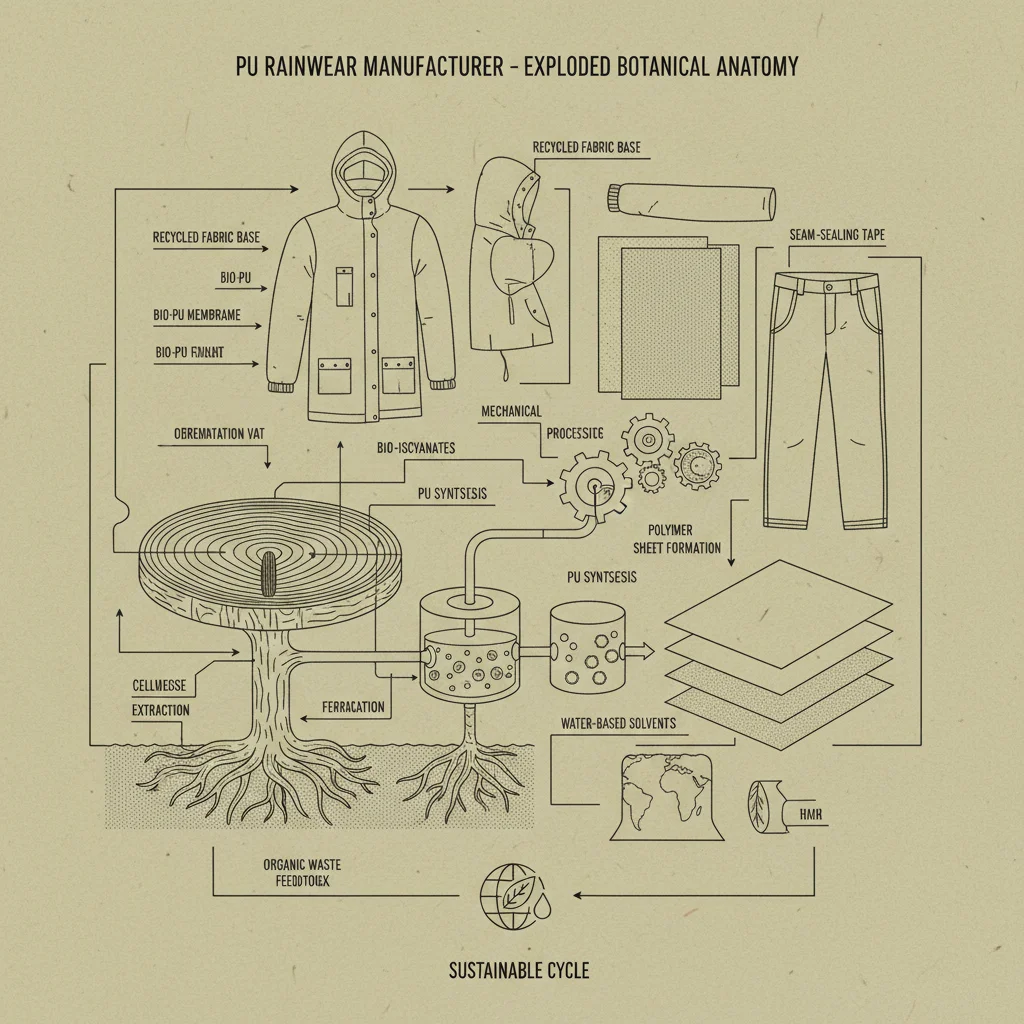
We've been experimenting with recycled PU lately, and it's showing promise. It's not quite as durable as virgin PU, but it's getting there. And the environmental benefits are significant. The lining material matters too. A cheap lining can make the raincoat feel clammy and uncomfortable. We've had good results with polyester mesh linings – they’re breathable and relatively durable.
Then there’s the reinforcement. We use a ripstop nylon in certain areas – around the shoulders, the elbows – to add extra strength. It’s a small detail, but it makes a big difference. You have to consider the entire construction. It's a system, not just a single material.
Real-World Testing Protocols for pu raincoat exporters
Forget the lab tests. Those are useful for getting a baseline, but they don’t tell you how a raincoat will actually perform in the real world. We do our testing on construction sites, in fishing boats, wherever our customers are actually using the product.
We'll have guys wear the raincoats for a full workday, in pouring rain, doing physical labor. We check for leaks, tears, abrasion resistance. We even have them wash the raincoats multiple times to see how they hold up. It’s brutal, but it’s the only way to get honest feedback.
pu raincoat exporters Performance Ratings (Based on Field Tests)
User Applications: What We've Learned about pu raincoat exporters
You’d be surprised how people actually use these things. We designed one model specifically for motorcyclists, with extra reinforcement and reflective strips. Turns out, a lot of delivery drivers are using them too. They spend all day in the rain, and they need something that can hold up.
And the construction workers? They're tough on everything. They want something that's durable, waterproof, and doesn't restrict their movement. They don't care about fancy features. They just want it to work.
The Benefits and Drawbacks of pu raincoat exporters
The benefits are clear: PU is lightweight, waterproof, and relatively durable. It’s also cheaper than some of the high-end alternatives, like Gore-Tex. But it's not perfect. It's not as breathable as some other materials, which can make you sweat. And it can be prone to cracking and peeling if it's not properly maintained.
Anyway, I think the sweet spot is finding a balance between cost, performance, and sustainability. We’re always looking for ways to improve the breathability of our PU raincoats without sacrificing durability.
The biggest advantage of PU is its flexibility in manufacturing. You can easily mold it, weld it, and print on it. This allows for a lot of customization options, which is important for meeting the specific needs of different customers.
Customization Options and Manufacturing Flexibility in pu raincoat exporters
We had a customer, a small boss in Shenzhen who makes smart home devices, who insisted on changing the interface to last month. Said he wanted to “future-proof” the raincoat. Completely unnecessary, added cost, and slowed down production, but he was adamant. You learn to pick your battles.
Seriously though, we can do a lot. We can customize the color, the size, the length, the hood style, the pocket placement, the zipper type… you name it. We can even add logos and branding. The MOQ (minimum order quantity) depends on the complexity of the customization, of course.
We're also experimenting with different coatings and treatments to enhance the performance of the raincoats. Things like water repellent finishes, anti-static treatments, and UV protection. It’s all about adding value for the customer.
Summary of Key Customization Parameters for pu raincoat exporters
| Customization Feature |
Complexity Level |
Cost Impact |
Lead Time Extension |
| Color Change |
Low |
Minimal |
1-2 days |
| Logo Printing |
Medium |
Moderate |
3-5 days |
| Hood Style Modification |
Medium |
Moderate |
5-7 days |
| Pocket Addition/Removal |
High |
Significant |
7-10 days |
| Material Upgrade (e.g., recycled PU) |
Medium |
Moderate to High |
5-7 days |
| Interface Change (like that guy) |
Very High |
Extremely High |
10+ days |
FAQs
Honestly? The welding of the seams. A cheap raincoat will have poorly welded seams that leak almost immediately. A good one will use high-frequency welding or taping to create a watertight seal. It also comes down to the PU film itself, the quality of the material. Cheap PU feels like plastic, good PU is more flexible and durable. And the details - a quality zipper makes a world of difference.
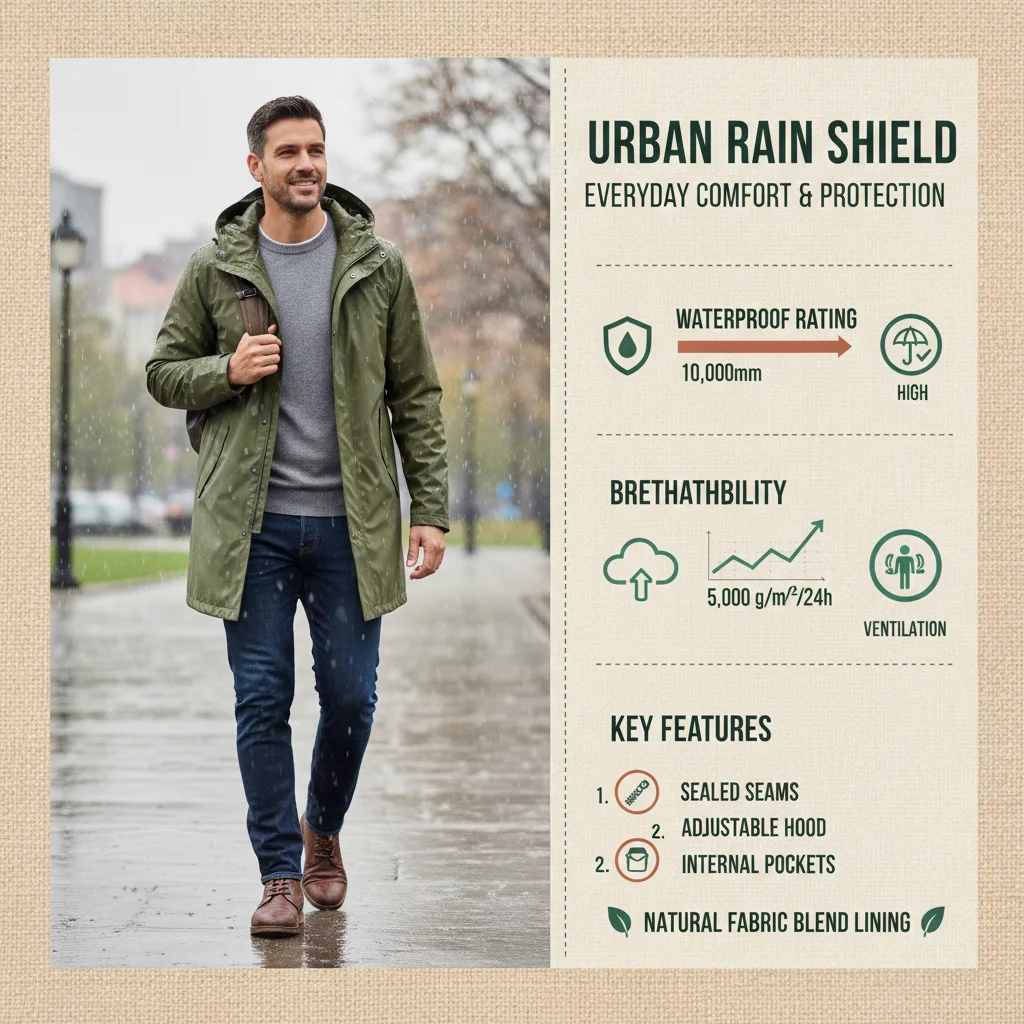
It's crucial. PU isn’t naturally breathable, so you need to look for raincoats with ventilation features like pit zips or a breathable lining. Otherwise, you'll end up soaked in sweat even if the rain has stopped. Some manufacturers are using microporous PU films that allow some moisture vapor to escape, but they're usually more expensive.
It’s tricky. Traditional PU isn’t easily recyclable, but there’s growing research into chemical recycling methods. We're seeing more suppliers offering recycled PU film, which is a step in the right direction. It’s not a perfect solution yet, but it's getting better. The biggest issue is sorting the materials - PU often has to be separated from other fabrics and components.
Simple. Wash it gently with mild soap and water. Avoid harsh detergents or fabric softeners. Don't put it in the dryer – hang it to dry. And occasionally re-apply a waterproof coating to maintain its water repellency. Don’t store it in direct sunlight, either. The UV rays can degrade the PU over time.
A decent exporter should offer at least a one-year warranty against defects in materials and workmanship. Some will offer longer warranties, but read the fine print. Warranties usually don’t cover damage caused by misuse or normal wear and tear. It’s always a good idea to ask about the warranty policy before placing an order.
Definitely. We’re seeing a push towards more minimalist designs, with hidden pockets and streamlined silhouettes. There’s also a growing demand for raincoats with integrated tech features, like Bluetooth speakers or phone chargers. And, of course, sustainability is a huge trend. People want raincoats that are not only waterproof but also environmentally friendly.
Conclusion
So, yeah, the pu raincoat game is complex. It’s not just about slapping some PU film onto some fabric. It’s about understanding materials, manufacturing processes, user needs, and sustainability concerns. It’s about finding that sweet spot between cost, performance, and environmental responsibility.
Ultimately, whether this thing works or not, the worker will know the moment he tightens the screw. If it's holding up, if it's keeping him dry, then we've done our job. And if it's not... well, back to the drawing board. You can find more information and explore our range of pu raincoat exporters at www.jjpuraincoat.com