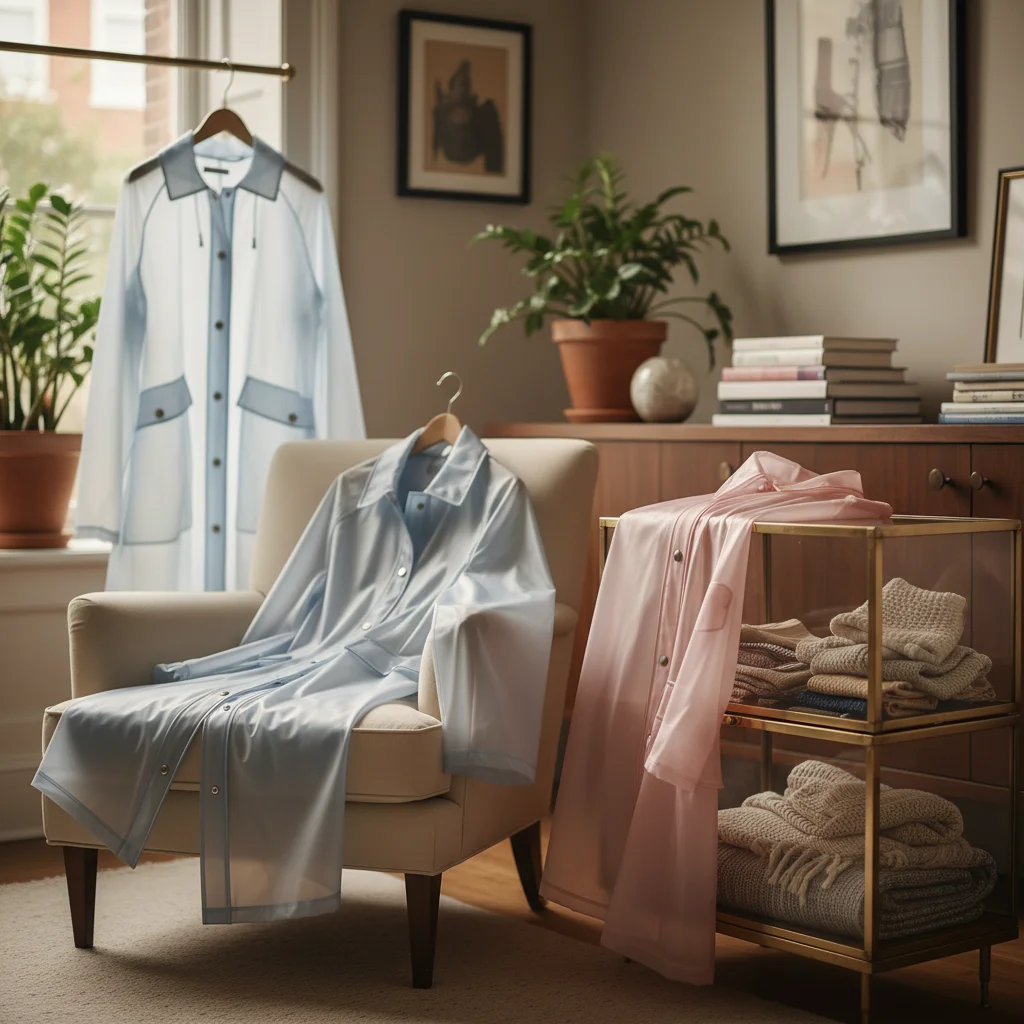
Selecting professional rainwear for active outdoor use often involves a difficult trade-off between absolute waterproof protection and thermal comfort. For cycling enthusiasts and nature explorers, a garment that only blocks water without providing warmth or breathability often leads to a damp, chilled experience during autumn or winter commutes.
The industry is shifting away from basic PVC sheets toward advanced polyurethane (PU) coatings and integrated linings. This transition is driven by a need for gear that supports high mobility and meets stringent environmental and safety certifications, ensuring that the garments are safe for the skin and the planet.
Understanding the technical nuances of material selection and construction is essential for those sourcing from a men rain coat Manufacturer. This analysis explores the engineering behind modern PU rainwear and how specific design choices impact long-term durability and user performance.


Historically, rainwear relied on heavy rubberized fabrics or basic PVC, which offered waterproofing but lacked breathability and flexibility. As the demands of outdoor athletics and urban commuting grew, the industry moved toward Polyurethane (PU). PU provides a superior strength-to-weight ratio and can be applied as a coating to knitted polyester fabrics, creating a hybrid that is both durable and lightweight.
Modern advancements now allow for welded seams rather than traditional stitching, which eliminates the most common failure points where water typically leaks through. This shift in manufacturing has transformed rainwear from simple emergency covers into professional-grade equipment capable of sustaining heavy use in challenging environments.
A high-performance rain shell is defined by its material composition and construction method. For professional outdoor use, a 100% Polyester knitted fabric base is often utilized, providing a flexible foundation that allows for natural body movement. This base is then treated with a 100% PU coating, typically ranging between 190-200gsm, to ensure a complete barrier against wind and liquid penetration.
The critical technical factor is the application of the PU layer. Unlike simple sprays, a high-grade coating is integrated into the fabric, ensuring it does not peel or crack over time. When combined with welded seams, the garment achieves a hydrostatic seal that prevents water ingress even under the pressure of wind-driven rain, making it suitable for high-velocity activities like cycling.
Furthermore, the integration of a universal fit design ensures that the garment can be layered over existing clothing without restricting movement. This versatility is key for users who operate in varying climates, where the ability to add or remove mid-layers is essential for maintaining a stable core temperature.
Waterproofing alone is insufficient for cold-weather rain protection. In rainy conditions, the combination of wind and moisture rapidly strips heat from the body, a process known as conductive cooling. To combat this, advanced rainwear integrates a secondary thermal layer.
The integration of a 100% polyester fleece lining transforms a basic waterproof shell into a thermal barrier, trapping a layer of warm air against the body while the PU exterior repels external moisture.
This dual-layer approach is particularly effective for those who spend extended periods outdoors, such as festival-goers or nature explorers. The fleece lining doesn't just provide warmth; it also adds a level of comfort by preventing the "clammy" feel often associated with single-layer plastic raincoats, ensuring a dry microclimate inside the garment.
When evaluating rainwear, the industry relies on several key performance indices. Durability is measured by the resistance of the PU coating to abrasion and the integrity of the welded seams. Portability is assessed by how compactly the garment can be stored without damaging the waterproof membrane.
For commercial buyers, the value proposition lies in the balance between these factors. A garment that is highly waterproof but impossible to carry is less valuable for a cyclist than a packable poncho that offers reliable, professional-grade protection.
In a typical urban setting, such as a daily bicycle commute, the primary requirement is rapid deployment and reliability. A packable PU poncho that folds into its own chest pocket allows the user to respond to sudden weather changes without needing a separate bag, reducing clutter and increasing efficiency.
In wilder scenarios, such as hiking or festival attendance, the focus shifts toward long-term exposure. Here, the windproof nature of the PU coating prevents wind chill, while the fleece lining maintains core warmth. The ability to customize these garments via OEM/ODM services allows brands to tailor specifications—such as adding reflective elements for safety or adjusting the fabric weight—to meet specific regional needs.
The textile industry is facing increasing scrutiny regarding the environmental impact of synthetic coatings. Sustainability in rainwear is no longer just about using recycled materials, but about extending the product lifecycle. By utilizing high-durability PU and welded seams, manufacturers reduce the frequency of replacement, thereby lowering the global ecological footprint.
Compliance with international standards is a non-negotiable requirement for global market entry. Certifications like Oeko-Tex Standard 100 ensure that the fabrics and chemicals used in the PU coating are free from harmful substances, making them safe for direct skin contact.
For professional sourcing, auditing via BSCI and GRS provides transparency into the ethical manufacturing process. This ensures that the production of high-volume orders—such as the 800pcs MOQ common in custom PU rainwear—is conducted under fair labor conditions and sustainable resource management.
When selecting a production partner, buyers must look beyond the unit price and evaluate the total value. This includes the reliability of the supply chain, the precision of quality control (such as the use of hydrostatic testers), and the ability to provide rapid prototyping through free sample services.
The trade-off between PVC and PU is a primary decision point. While PVC is cheaper, it lacks the flexibility and longevity of PU. A PU-based system with a fleece lining offers a significantly lower replacement rate and higher user satisfaction, which translates to better brand positioning for the retailer.
The following framework provides a qualitative comparison between standard rainwear and professional PU-fleece integrated solutions to guide procurement decisions.
| Evaluation Factor | Standard PVC Gear | Professional PU Poncho | Business Value Impact |
|---|---|---|---|
| Material Durability | Basic PVC / Low Flex | Welded PU + Fleece | Lower Replacement Rate |
| Portability | External Carry Bag | Integrated Chest Pocket | Higher User Convenience |
| Thermal Property | Zero Insulation | Polyester Fleece Lining | Expanded Seasonal Use |
| Certification | Basic/None | Oeko-Tex 100 / GRS | Easier Global Compliance |
| Market Appeal | Generic / Commodity | Eco-Friendly / Technical | Premium Brand Positioning |
| Primary Use Case | Light Walking | Cycling / Outdoor / Festivals | Broader Customer Base |
Unlike DWR (Durable Water Repellent) sprays that simply cause water to bead on the surface, a PU (Polyurethane) coating creates a continuous, non-porous barrier on the fabric. This ensures total waterproofness even under heavy rain. When combined with welded seams, it eliminates leak points common in stitched garments, making it a professional choice for high-exposure activities.
Yes, the combination of knitted polyester and PU coating is specifically designed for mobility. The fabric allows for the necessary range of motion, while the waterproof and windproof properties protect the rider from the "wind-chill" effect caused by speed during rainy commutes. The packable design also ensures it doesn't interfere with cycling gear.
For global markets, Oeko-Tex Standard 100 is critical as it guarantees the material is free from harmful chemicals. Additionally, BSCI (Business Social Compliance Initiative) and GRS (Global Recycled Standard) certifications indicate that the manufacturer adheres to ethical labor practices and sustainable material sourcing, which is increasingly demanded by European and North American consumers.
Most professional manufacturers offer comprehensive OEM/ODM services. This includes customizing colors, adding branded logos via screen or transfer printing, and adjusting technical specifications. Typically, there is a minimum order quantity (MOQ), such as 800 pieces per color, to accommodate the setup of custom production lines.
While a fleece lining adds a small amount of bulk compared to a single-layer shell, intelligent design allows the garment to remain highly packable. By using high-density polyester fleece, warmth is provided without excessive thickness, allowing the entire poncho to still fold compactly into its integrated chest pocket for easy transport.
For custom OEM/ODM orders, delivery typically ranges from 30 to 90 days. This timeline covers fabric sourcing, PU coating application, custom printing, rigorous quality inspection (such as needle detection and hydrostatic testing), and global logistics. Accurate lead times depend on the complexity of the customization and the total order volume.
The transition toward PU-coated, fleece-lined rainwear reflects a broader industry trend toward technical excellence and environmental responsibility. By moving away from disposable-quality PVC and embracing materials that meet Oeko-Tex 100 standards, the industry is providing users with gear that is not only more effective but also more sustainable.
For businesses and procurement officers, the key to success lies in partnering with a manufacturer that integrates research, development, and strict quality control. Prioritizing durability, thermal comfort, and certified safety ensures that the final product meets the demands of the modern, active consumer while reducing the long-term ecological footprint.
Hit enter to search or ESC to close