Selecting the right outerwear for persistent rain requires a balance between textile science and functional design. While many options exist, the shift toward high-performance polyurethane (PU) coatings has redefined how professional and casual rainwear are engineered to withstand heavy precipitation.
The modern market is moving away from basic PVC layers toward eco-conscious, breathable, and high-water-column materials. This evolution is driven by a consumer demand for "urban resilience"—clothing that performs like technical gear but maintains the aesthetic of high-fashion silhouettes.
For brands and distributors seeking a reliable pu raincoat Manufacturer, understanding the intersection of sustainable material sourcing and precision welding is key to ensuring long-term product durability and market appeal.


Traditional rainwear relied heavily on PVC, which posed significant environmental challenges. The industry is now pivoting toward PFC-free and PVC-free PU coatings applied to recycled polyester. This transition not only reduces the ecological footprint but often improves the garment's flexibility and tactile feel.
By utilizing 100% recycled polyester knitted fabrics, manufacturers can achieve a circular production model. When combined with Oeko-Tex 100 certification, these materials ensure that the final product is safe for the wearer and free from harmful substances, meeting the strict regulatory standards of European and North American markets.
The efficacy of a raincoat is measured by its water column rating and the integrity of its seams. A rating of 5000-8000 MM indicates that the fabric can withstand significant water pressure before leaking, making it suitable for persistent, heavy rain. However, fabric alone is insufficient if the construction points remain vulnerable.
Precision-welded seams are the critical differentiator in high-end rainwear. Unlike traditional stitching, which creates thousands of tiny holes in the material, welding uses heat and pressure to fuse the fabric together. This creates a continuous, waterproof bond that eliminates leakage at the joints.
Integrating a 190-200gsm fabric weight ensures a balance between durability and mobility. This thickness provides enough substance to maintain the garment's structure—essential for trench-inspired designs—without adding unnecessary bulk that would hinder the wearer during a daily commute.
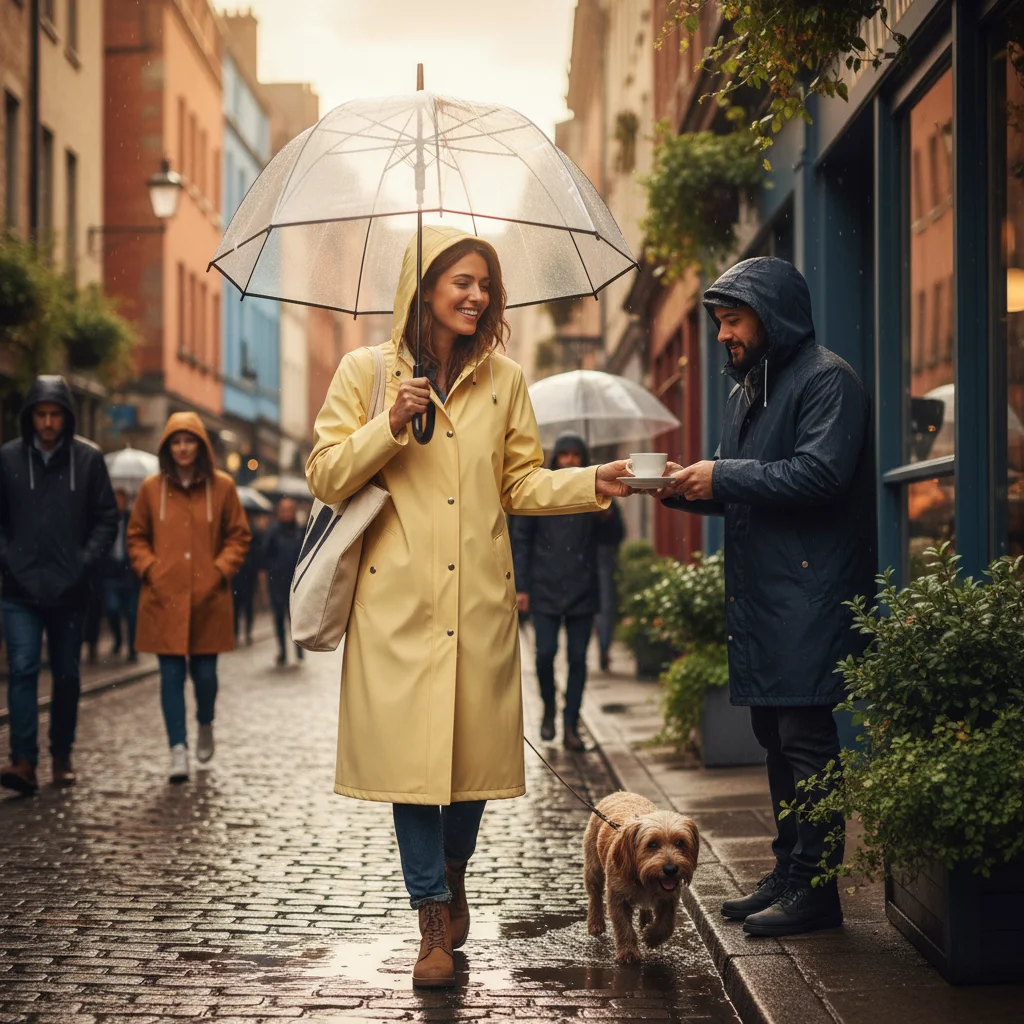
Modern rainwear must solve the conflict between utility and aesthetics. The "Trench Silhouette" has become a benchmark for urban outerwear because it allows a transition from professional office environments to casual outdoor settings without requiring a wardrobe change.
True functional elegance in rainwear is achieved when technical specifications—such as a 5000mm water column—are invisible to the eye but evident in performance, allowing the silhouette to remain polished regardless of weather conditions.
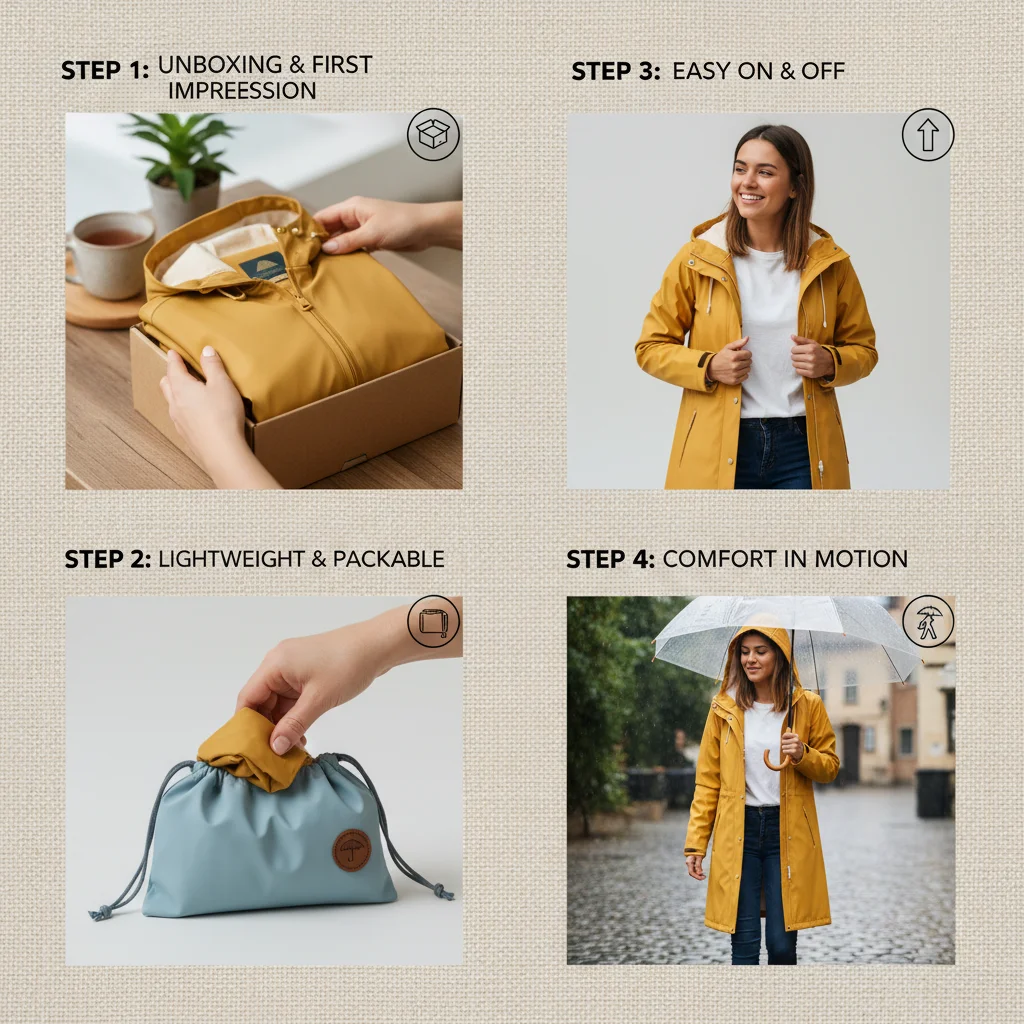
Beyond the visual, mobility is enhanced through integrated back bottom vents and adjustable cuff systems. These features prevent the "cling" effect during movement and ensure a secure fit that prevents wind and water from entering the sleeves, demonstrating a user-centric approach to garment engineering.
When evaluating rainwear quality, the relationship between the base fabric and the coating determines the garment's lifespan. Recycled polyester provides the necessary tensile strength, while the PU coating provides the chemical barrier. The synergy between these two components affects everything from breathability to wind resistance.
To illustrate the relative value of premium PU construction over standard rainwear, we can analyze several key performance indicators. Factors such as eco-compliance and waterproof rating significantly impact the market positioning and the return on investment for retail brands.
For brands engaging in OEM/ODM services, the lead time and customization capability are primary operational concerns. A typical production cycle ranges from 30 to 90 days, encompassing the prototype phase—where 1-2 free samples are produced to verify fit and fabric—through to mass production and international logistics.
Effective supply chain control is essential for ensuring the traceability of recycled materials. This transparency allows brands to substantiate their sustainability claims, backed by certifications like GRS (Global Recycled Standard) and BSCI audits, which ensure ethical labor practices within the manufacturing facility.
The trajectory of the rainwear industry is moving toward "intelligent sustainability." This means not only using recycled plastics but also developing coatings that degrade more safely in the environment without sacrificing the 5000-8000 MM waterproof rating.
We are also seeing a convergence of workwear and rainwear. As hybrid work models persist, the demand for outerwear that can be worn over a business suit while providing complete protection from heavy rain is increasing. This reinforces the value of the trench-inspired PU coat over generic utility rainwear.
Finally, the integration of advanced testing—such as hydrostatic and tension testing—during the production phase is becoming a standard requirement for exporters to the Nordic and German markets, where weather extremes demand uncompromising product reliability.
Choosing a production partner requires a systematic evaluation of technical capabilities versus market needs. A manufacturer must be able to balance the MOQ (typically around 500pcs per color) with the ability to provide high-fidelity customization via screen or transfer printing.
The decision process should prioritize the verification of certifications. Oeko-Tex 100 is non-negotiable for skin-contact textiles, while GRS certification validates the sustainability of the recycled polyester base.
The following framework provides a comparative look at how premium PU rainwear differs from standard market offerings across key technical and commercial dimensions.
| Evaluation Factor | Standard Rainwear | Premium PU Coat | Market Impact |
|---|---|---|---|
| Waterproof Rating | Basic Coating | 5000-8000 MM | Higher Reliability |
| Seam Integrity | Standard Stitching | Precision Welded | Zero-Leakage |
| Material Base | Conventional PVC | Recycled Polyester | Eco-Compliance |
| Chemical Profile | Standard PFOA | PFC/PVC-Free | Health & Safety |
| Design Profile | Generic Utility | Trench Silhouette | Higher Retail Value |
| Certification | General Grade | Oeko-Tex 100 | Market Access (EU/NA) |
PU (Polyurethane) coatings are generally more flexible, breathable, and environmentally friendly than PVC (Polyvinyl Chloride). While PVC is often cheaper, it is stiffer and contains phthalates that can be harmful. Premium PU coatings, especially those that are PFC-free and applied to recycled polyester, offer a superior tactile experience and a significantly lower ecological impact while maintaining high waterproof ratings.
Stitching involves piercing the fabric with a needle, creating thousands of tiny holes where water can seep through, even if the fabric itself is waterproof. Welded seams use heat and pressure to fuse the material together, creating a seamless, airtight, and watertight bond. This is essential for garments designed for heavy rain, as it ensures the wearer remains dry at the most vulnerable points of the garment.
The water column rating (measured in MM) indicates how much water pressure a fabric can withstand before leaking. A rating of 5000-8000 MM is considered high-performance for urban and outdoor use, meaning the fabric can resist significant pressure from heavy rain. When selecting a manufacturer, request hydrostatic test reports to verify that the actual production matches these specifications.
Yes, most professional manufacturers offer OEM services. Customization typically includes logo placement via screen printing or transfer printing. For these services, there is usually a Minimum Order Quantity (MOQ), such as 500 pieces per color. It is recommended to use the prototype service to verify the logo's placement and color accuracy before proceeding to mass production.
Oeko-Tex Standard 100 is one of the world's best-known labels for textiles tested for harmful substances. It certifies that every component of the garment—from the fabric and coating to the thread and buttons—has been tested for harmful chemicals. For PU rainwear, this ensures the coating is safe for the skin and compliant with international health and environmental regulations.
A standard delivery time is typically between 30 and 90 days after the firm order is confirmed. This timeline accounts for fabric sourcing, prototype approval, mass production, and quality control checks (such as needle detection and hydrostatic testing). Complexity in design or high volumes of customization may extend this period, so clear communication with the production team is vital.
The evolution of the PU raincoat from a simple utility garment to a sophisticated piece of urban outerwear reflects a broader trend in the textile industry: the integration of sustainability with high-performance engineering. By prioritizing recycled materials and advanced welding techniques, brands can offer products that meet the rigorous demands of the modern consumer.
Ultimately, the success of a rainwear collection depends on the ability to deliver consistent quality. Partnering with a manufacturer that maintains strict Oeko-Tex and GRS standards ensures that the final product is not only weather-resilient but also ethically produced and market-ready for the global stage.
Hit enter to search or ESC to close