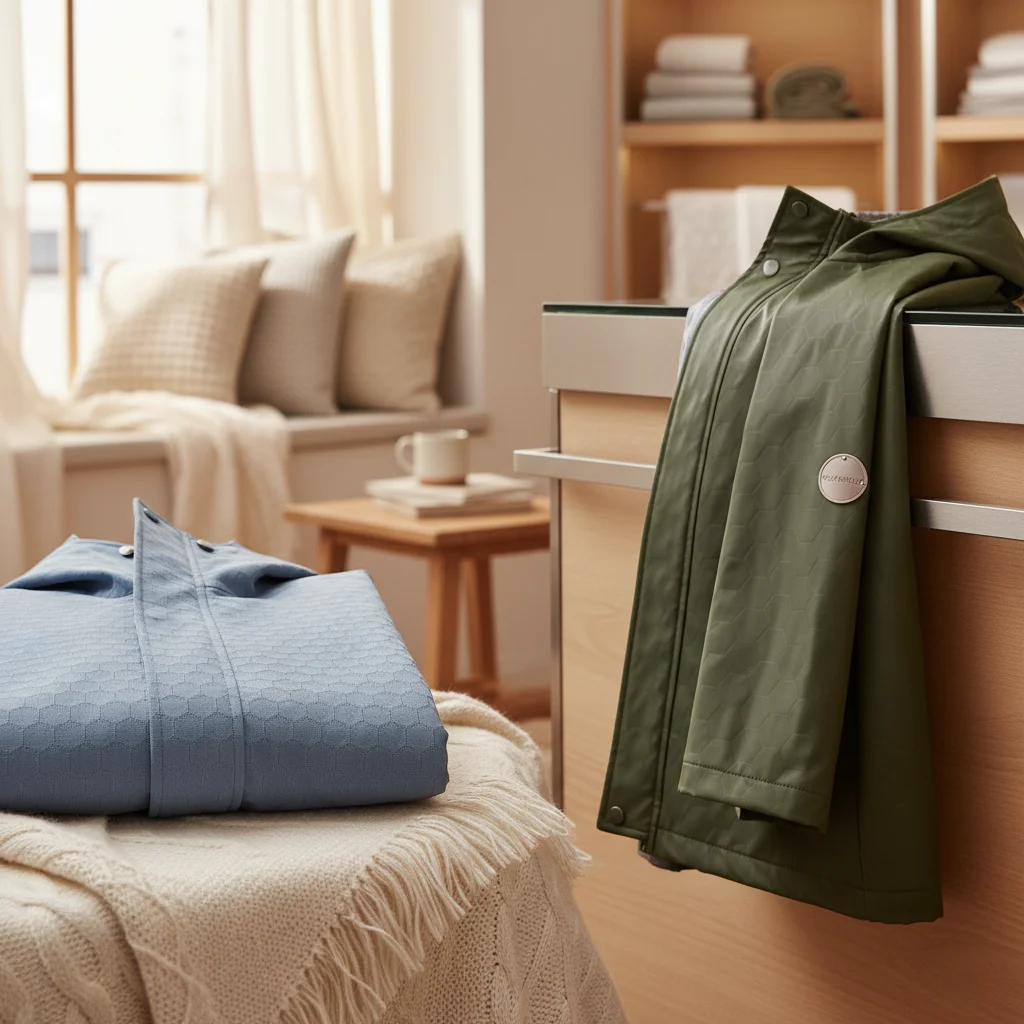
Selecting the right protective gear is essential for maintaining productivity and health in demanding environments, and a high-quality mens work raincoat serves as the first line of defense against unpredictable weather. In the global manufacturing and labor sectors, the ability to stay dry and wind-protected directly impacts worker efficiency and overall safety, making the choice of materials and design a critical operational decision.
From a technical perspective, the shift toward advanced polyurethane (PU) coatings and welded seam technology has revolutionized how professional rainwear is engineered. Modern requirements demand a balance between absolute waterproofing and the flexibility needed for physical labor, ensuring that a mens work raincoat does not hinder movement while providing a total barrier against moisture.
Understanding the nuances of textile engineering—such as the difference between knitted polyester bases and PU coatings—allows procurement managers and safety officers to invest in gear that lasts. This guide explores the critical components of industrial rainwear, focusing on the standards of durability and functionality that define a professional-grade mens work raincoat.

Global Industrial Relevance of Professional Rainwear
In the global industrial landscape, weather-related downtime represents a significant loss in productivity. For sectors such as logistics, construction, and outdoor maintenance, the deployment of a standardized mens work raincoat is not merely a convenience but a health and safety requirement. According to ISO safety standards, protecting workers from hypothermia and moisture-induced stress is paramount to reducing workplace accidents.
The challenge lies in the environment; workers often face "gray-zone" weather where rain is accompanied by wind and fluctuating temperatures. This necessitates a garment that offers more than just a surface coating—it requires an integrated system of windproofing and water-repellency that can withstand the rigors of daily industrial use without degrading.
Defining the Technical Standard of Work Raincoats
A professional mens work raincoat is defined as a specialized piece of Personal Protective Equipment (PPE) designed to isolate the wearer from external moisture while maintaining structural integrity. Unlike consumer-grade rain jackets, work-specific gear focuses on the synergy between a durable base fabric—often a polyester knit—and a high-density polyurethane (PU) coating.
This combination ensures that the garment is 100% waterproof. The integration of PU coating prevents water molecules from penetrating the fibers, while the knitted polyester provides the necessary tensile strength to prevent tears during heavy-duty tasks. This technical duality is what allows the garment to perform in torrential rain and high-wind scenarios.
Furthermore, the definition of a "work" raincoat extends to its safety certifications, such as Oeko-Tex 100, which ensures the materials are free from harmful chemicals. In a modern industrial context, the garment must also balance protection with visibility, often integrating reflective elements to ensure the worker remains seen in low-visibility rainy conditions.
Core Components of High-Performance Protection
The effectiveness of a mens work raincoat begins with its seam construction. While the fabric itself may be waterproof, the points where fabric panels are joined are traditional leak points. High-performance gear utilizes welded seams, which use heat and pressure to fuse the material together, eliminating the need for needle holes and ensuring a watertight seal.
Another critical factor is the closure system. A professional mens work raincoat employs a dual-layer approach: a waterproof zipper coupled with a practical storm flap secured by snap buttons. This prevents "wind-driven rain" from penetrating the chest area, which is the most common point of failure in lower-quality rainwear.
Finally, ergonomics play a vital role. Features such as elasticated hood and sleeve endings, along with adjustable hoods, ensure a snug fit that prevents water from running down the neck or arms. The inclusion of reflective tape on the cuffs further enhances the utility of the mens work raincoat, bridging the gap between weather protection and active safety.
Comparative Analysis of Waterproofing Efficiency
When evaluating different types of mens work raincoat configurations, it is essential to look at the material weight and the method of application. A fabric weight of 190-200gsm provides an optimal balance between durability and breathability, ensuring the worker is not weighed down by the gear while remaining fully protected.
The following data illustrates the performance ratings of various construction methods used in professional rainwear, highlighting how integrated PU coatings and welded seams outperform traditional stitched alternatives.
Efficiency Rating of mens work raincoat Construction Methods
Global Applications across Heavy Industries
The application of a high-quality mens work raincoat spans across diverse global regions. In the rainy seasons of Southeast Asia or the unpredictable climates of Northern Europe, industrial zones rely on these garments to maintain continuous operation. In logistics and delivery hubs, where workers are constantly moving between vehicles and warehouses, the quick-dry nature of PU-coated fabrics is indispensable.
Furthermore, in post-disaster relief operations and remote industrial zones, such as offshore oil rigs or mining sites, the mens work raincoat serves as critical survival gear. By preventing saturation and subsequent wind-chill, these garments protect workers from the onset of hypothermia, ensuring that essential infrastructure repairs can continue regardless of the weather.
Long-Term Value and Operational Advantages
Investing in premium mens work raincoat solutions provides tangible long-term value through reduced replacement cycles. Because PU-coated polyester is inherently more resistant to abrasion and chemical degradation than basic plastic ponchos, the cost-per-wear is significantly lower over a three-year operational period.
Beyond the financial metrics, there is a psychological advantage to providing workers with superior gear. When employees feel protected and comfortable, their focus remains on the task at hand rather than the discomfort of damp clothing. This leads to higher morale and a stronger culture of safety within the organization.
Reliability is the ultimate currency in industrial settings. A mens work raincoat that does not leak at the seams or fail at the zipper creates trust between the employer and the workforce, signaling that worker well-being is a top organizational priority.
Future Innovations in Protective Textile Tech
The future of the mens work raincoat is leaning heavily toward sustainability and "smart" textiles. We are seeing a transition toward PFC-free coatings to eliminate harmful perfluorinated chemicals from the production process, ensuring that waterproof gear does not contribute to long-term environmental toxicity.
Digital transformation is also entering the apparel space, with the potential for integrated sensors that can monitor worker temperature or location in hazardous weather. While these are emerging technologies, the core focus remains on enhancing the basic properties of PU and polyester blends to increase breathability without sacrificing the 100% waterproof barrier.
As automation increases in the manufacturing of these garments, we can expect more precision in welded seam technology and customized ergonomic fits. This will allow the mens work raincoat to evolve from a generic protective layer into a precision-engineered tool for industrial productivity.
Technical Specifications Analysis of Professional Rainwear Materials
| Material Component | Technical Metric | Performance Level | Industrial Impact |
|---|
| PU Coating | 100% Waterproof | Excellent | Total moisture isolation |
| Polyester Knit | 190-200gsm | High Durability | Tear resistance in work zones |
| Welded Seams | Zero-Stitch Bond | Superior | Elimination of leak points |
| Reflective Tape | High-Vis Lumen | Critical Safety | Low-light visibility |
| Closure System | Zip + Snap | Reliable | Prevention of wind-driven rain |
| Eco-Certification | Oeko-Tex 100 | Compliant | Skin-safe, non-toxic wear |
FAQS
Polyurethane (PU) is generally more flexible, breathable, and durable than PVC. In a work environment, PU allows for better movement and does not crack as easily in cold temperatures, making it the preferred choice for professional-grade rainwear that must withstand repetitive motion and various weather extremes.
Yes. Traditional stitching creates thousands of tiny holes in the fabric. Even with taped seams, these are potential failure points. Welded seams use heat to fuse the material into a single piece, ensuring that the mens work raincoat remains 100% waterproof even under high pressure or heavy downpours.
To maintain a mens work raincoat, avoid harsh detergents and machine drying at high temperatures, which can degrade the PU coating. Wipe down with a damp cloth for daily cleaning and hang to dry in a shaded, ventilated area to preserve the structural integrity of the waterproof layers.
Absolutely. Most professional manufacturers offer OEM/ODM services, allowing for customized logos via screen or transfer printing. This is common for companies wanting to integrate their branding into the safety gear of their workforce while maintaining the technical specifications of the raincoat.
The Oeko-Tex 100 certification ensures that every component of the garment—from the thread to the PU coating—has been tested for harmful substances. For workers wearing a mens work raincoat for 8-12 hours a day, this guarantees that the gear is safe for prolonged skin contact.
A fabric weight of 190-200gsm is widely considered the "sweet spot." It provides enough substance to be durable and windproof for winter and autumn, yet it remains light enough to be wearable during rainy spring or summer days without causing excessive overheating.
Conclusion
The selection of a professional mens work raincoat is a strategic decision that balances material science, safety certifications, and ergonomic design. By prioritizing features such as PU-coated polyester, welded seams, and high-visibility elements, organizations can ensure that their workforce remains protected, productive, and safe regardless of the environmental challenges.
Looking forward, the integration of eco-friendly, PFC-free materials and smarter textile engineering will further elevate the standard of industrial rainwear. We encourage procurement officers and safety managers to move beyond basic rain gear and invest in precision-engineered solutions that offer long-term value and uncompromising protection. Visit our website for more professional solutions: www.jjpuraincoat.com