When sourcing protective outerwear for children, procurement managers often struggle to balance absolute waterproofing with thermal comfort and safety certifications. The challenge lies in finding materials that block moisture without trapping sweat or utilizing harmful chemicals, particularly for infants and toddlers who have sensitive skin and high activity levels.
For wholesalers and retailers, selecting a reliable polyurethane raincoat exporter is not just about price per unit, but about the technical integration of shell fabrics and linings. The synergy between a high-density PU coating and specialized thermal linings determines whether a product survives the harsh wet-cold climates of Northern Europe and North America.
This analysis explores the critical technical parameters of high-performance rainwear, focusing on how welded seam technology and Oeko-Tex certified materials create a safer, more durable product. By understanding these specifications, buyers can make informed decisions through a professional polyurethane raincoat exporter to upgrade their rainwear collections.


Professional PU rainwear is not a single layer of plastic but a composite system. It typically starts with a 100% polyester knitted fabric base, which provides the necessary flexibility and tensile strength, followed by a 100% PU coating (ranging from 190-200gsm). This dual-layer approach ensures that the garment is not only waterproof but also resistant to tearing during active use.
The internal architecture is equally critical, often utilizing polyester fleece (approximately 180gsm) to provide a thermal barrier. This structural combination is essential for products like rain socks or booties, where the shell must repel external mud and rain while the lining maintains a stable microclimate for the wearer's skin.
The primary failure point in most low-end rainwear is not the fabric itself, but the seams. While standard stitching creates thousands of tiny holes that allow water to seep through via capillary action, advanced welded seam technology uses heat and pressure to fuse the PU layers together, creating a monolithic waterproof barrier. This is particularly vital for footwear and lower-body rainwear that are frequently exposed to puddles.
Welded seam construction eliminates the need for needles and thread in critical areas, ensuring that the hydrostatic pressure resistance is maintained across the entire garment, not just the fabric panels.
Beyond seams, the choice of PU coating weight (gsm) affects the balance between durability and weight. A 190-200gsm coating provides a robust shield against heavy rain and wind without making the garment too stiff for a child to move comfortably. When coupled with an adjustable elastic snap closure, the design prevents water from entering through the top openings, providing a comprehensive seal.
Waterproofing alone is insufficient for cold-weather environments. Thermal insulation, provided by 180gsm polyester fleece, transforms a simple rain barrier into a functional weather-proof garment. This insulation works by trapping air pockets that retain body heat, which is crucial for infants who cannot regulate their temperature as efficiently as adults.
From a procurement perspective, the ROI of including high-density fleece is reflected in lower product return rates and higher customer satisfaction in Nordic and North American markets. The integration of thermal linings ensures that the product remains viable across multiple seasons, expanding the selling window for the retailer.
Practical application is the ultimate test of rainwear quality. For infants in prams, PU rain socks serve as essential booties that block wind and rain during outdoor walks. The extended cuff design allows trousers to be tucked in, preventing mud from entering the sock—a common pain point for parents during the autumn and winter months.
In educational settings and daycare centers, where children engage in "muddy play," the durability of the PU coating and the security of the snap-lock system are paramount. Products that stay securely on the ankle and resist abrasions from rough surfaces provide significantly more value than generic, loose-fitting rainwear.
The industry is shifting rapidly toward PFC-free materials to meet stringent global environmental standards. PFCs (perfluorinated chemicals) were traditionally used for water repellency but are now being phased out due to their persistence in the environment. Modern PU coatings must now achieve waterproof performance without these harmful additives.
Certifications such as Oeko-Tex Standard 100 have become a baseline requirement for the European market. This certification ensures that every component—from the polyester knit to the PU coating and the snap buttons—is free from harmful substances, making the rainwear safe for prolonged skin contact.
Future developments are likely to focus on increasing the recyclability of PU-coated fabrics. While traditional PU is difficult to recycle, the integration of GRS (Global Recycled Standard) audited processes in the manufacturing chain is a step toward a circular economy in the textile industry.
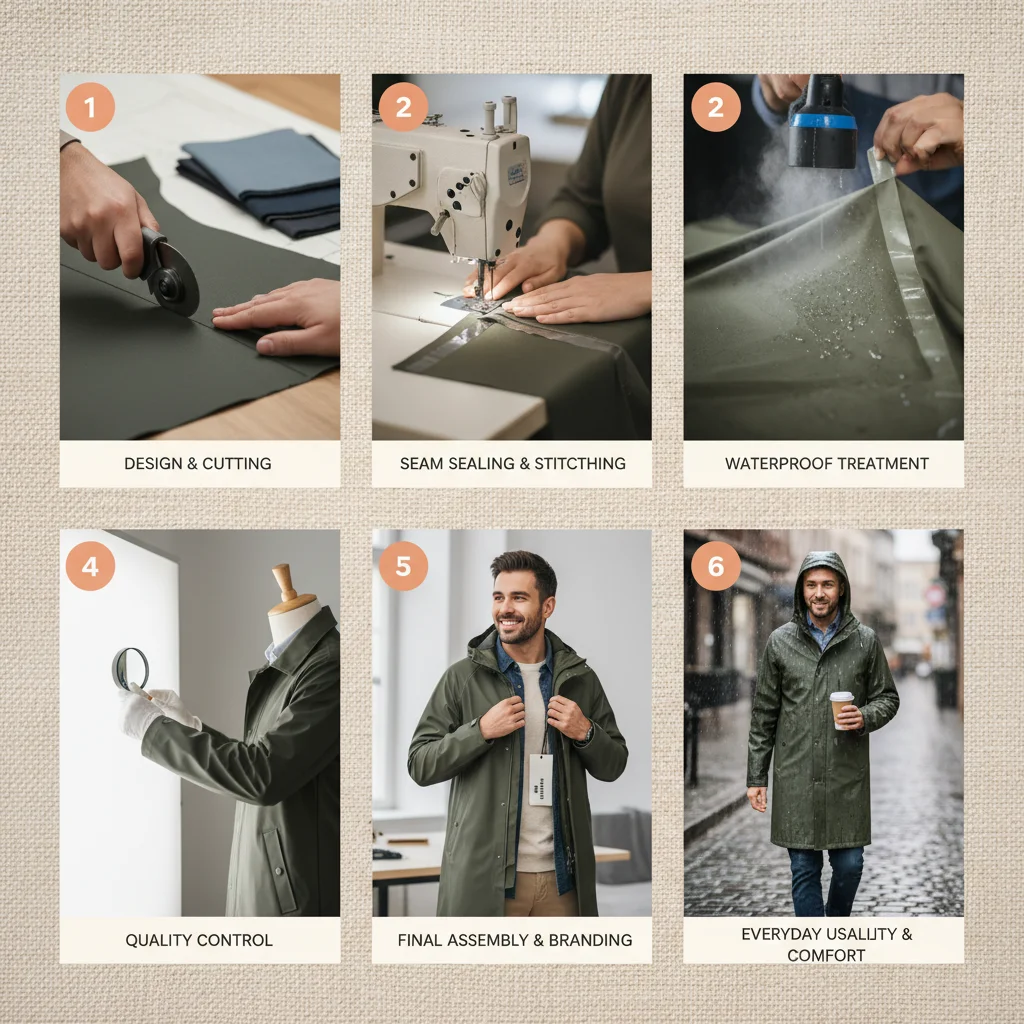
Managing bulk orders of PU rainwear requires strict control over the supply chain to ensure consistency in coating thickness and seam strength. Variations in PU application can lead to "pinholes" that cause leaks, which is why professional manufacturers utilize hydrostatic testers and needle detectors during the production process.
Logistics optimization is another critical factor. Because PU garments can be bulky, standardized packaging (such as 40pcs per carton) is used to maximize shipping container efficiency and reduce the risk of crushing during international transit from the factory to the distribution center.
For OEM/ODM clients, the primary challenge is the lead time, which typically ranges from 30 to 90 days. This window includes design validation, rapid prototyping (free samples), and the subsequent bulk production phase. Efficient communication between the design team and the production floor is essential to meet these deadlines without compromising quality.
| Feature | Generic Rainwear | Professional PU Wear | Buyer Value |
|---|---|---|---|
| Waterproofing | Basic Coating | Welded Seams + PU | Zero Leakage |
| Insulation | Thin Lining | 180gsm Heavy Fleece | Thermal Comfort |
| Safety Certs | None/Unknown | Oeko-Tex 100 | Skin Safety |
| Construction | Stitched Seams | High-Strength Weld | Longer Lifespan |
| Fit System | Loose Elastic | Adjustable Snap-Lock | Secure Fit |
| Chemicals | Contains PFCs | PFC-Free Materials | Eco-Compliance |
The primary difference is the dual-layer technical construction. While standard booties are often just fabric or thin rubber, professional PU rain socks combine a 190-200gsm PU-coated shell with welded seams to block all external moisture, and a 180gsm polyester fleece lining for thermal insulation. This makes them specifically engineered for wet, cold weather rather than just indoor use.
Yes, the materials used are Oeko-Tex Standard 100 certified and PFC-free. This means the fabric and coatings have been tested for harmful substances and are compliant with international safety standards, ensuring they are safe for the sensitive skin of infants and toddlers.
Absolutely. Professional manufacturers offer full OEM/ODM services, including custom logo application via screen printing or transfer printing. This allows brands to maintain their identity while utilizing the factory's technical production capabilities and certifications.
The adjustable elastic snap prevents the rainwear from slipping off during the child's movement. It allows parents to customize the fit to the specific ankle size of the child, ensuring that the garment stays in place and that no rain or mud can enter through the top opening.
The standard delivery time is typically between 30 to 90 days after a firm order is placed. This duration varies based on the level of customization required, the volume of the order, and the availability of raw materials in the supply chain.
Yes, the design features an extended cuff specifically intended for tucking in trousers. This creates a physical barrier that prevents rain, mud, and snow from dripping down the leg and entering the sock, keeping the child's feet completely dry.
Selecting a high-quality polyurethane rainwear product requires a focus on technical details over aesthetic appeal. The combination of welded seam technology, Oeko-Tex certified PU coatings, and heavy-duty fleece linings creates a product that is not only waterproof but also safe and thermally efficient. For buyers, these specifications are the only way to ensure long-term durability and user safety in challenging climates.
Whether you are expanding your current rainwear line or developing a new collection, partnering with a manufacturer that emphasizes quality control and certification is essential. For more information on professional production capabilities and customized PU rainwear solutions, you are invited to explore the offerings at https://www.jjpuraincoat.com.
Hit enter to search or ESC to close