
Selecting reliable pu raincoat Factories is a critical decision for brands looking to balance technical weather protection with commercial scalability. In the competitive landscape of woven garment manufacturing, the shift toward high-performance Polyurethane (PU) coatings has redefined how the industry approaches waterproof apparel, moving beyond basic utility toward fashion-forward, sustainable outerwear.
Procurement managers and brand owners often struggle with the trade-off between extreme waterproofing and environmental compliance. The challenge lies in finding a manufacturing partner capable of delivering high water-column ratings without relying on harmful PFCs or PVCs, while maintaining the structural integrity of welded seams for long-term durability.
This analysis provides a professional framework for evaluating PU rainwear manufacturers, focusing on technical parameters, sustainable material sourcing, and the quality control standards necessary to ensure a high-return investment in professional rainwear collections.

Core Technical Requirements for PU Rainwear

High-quality PU rainwear requires a precise combination of fabric base and coating application. A standard professional-grade garment typically utilizes a polyester knitted fabric base combined with a 100% PU coating, often targeting a weight range of 190-200gsm to balance flexibility with protective density. The technical focus is not just on the coating itself, but on how the fabric maintains its shape and windproof properties under stress.
From a manufacturing perspective, the integration of welded seams is a non-negotiable requirement for high-end rainwear. Unlike traditional stitched seams, which create thousands of potential leak points, welded seams use heat and pressure to fuse the material, ensuring that the garment remains waterproof even during persistent, heavy rainfall.
Evaluating Factory Production Capacities
When vetting pu raincoat Factories, the scale of operation must align with the brand's growth trajectory. A professional facility, such as the one operated by Cangzhou Jiujiang Imp. & Exp. Trading Co., Ltd, demonstrates capacity through a workforce of over 200 professional staff and an annual output of approximately 500,000 pieces. This scale allows for the absorption of bulk orders while maintaining consistent lead times.
Efficiency in production is driven by integrated management systems that oversee the entire cycle—from recycled fabric sourcing to final PU coating application. This vertical integration reduces the risk of supply chain bottlenecks and ensures that delivery timelines, typically ranging from 30 to 90 days, are met with precision.
Sustainable Material Integration in PU Coating
The modern rainwear market is shifting rapidly toward eco-compliance. The industry is moving away from traditional PVC-based coatings, which are environmentally persistent, toward PFC-free and PVC-free PU coatings. Integrating recycled polyester into the fabric base further reduces the environmental footprint, aligning production with global sustainability goals.
True sustainability in PU manufacturing is verified through certifications. The use of Oeko-Tex Standard 100 certified materials ensures that textiles are tested for harmful substances, making them safe for the wearer and the environment. Factories that hold GRS (Global Recycled Standard) and BSCI audits provide an additional layer of transparency regarding ethical labor and material traceability.
Waterproofing Performance Metrics Analysis
Waterproofing efficacy is measured primarily through the water column test, which determines the hydrostatic pressure a fabric can withstand before water penetrates. While basic rainwear may offer minimal protection, premium PU coats target a water column of 8000mm, providing extreme protection against heavy rain.
The illustrative data above demonstrates the relative performance gap between standard utility rainwear and premium PU engineering. The increase in water column rating and seam integrity directly correlates to the product's lifespan and its suitability for extreme weather environments.
OEM and ODM Customization Workflows
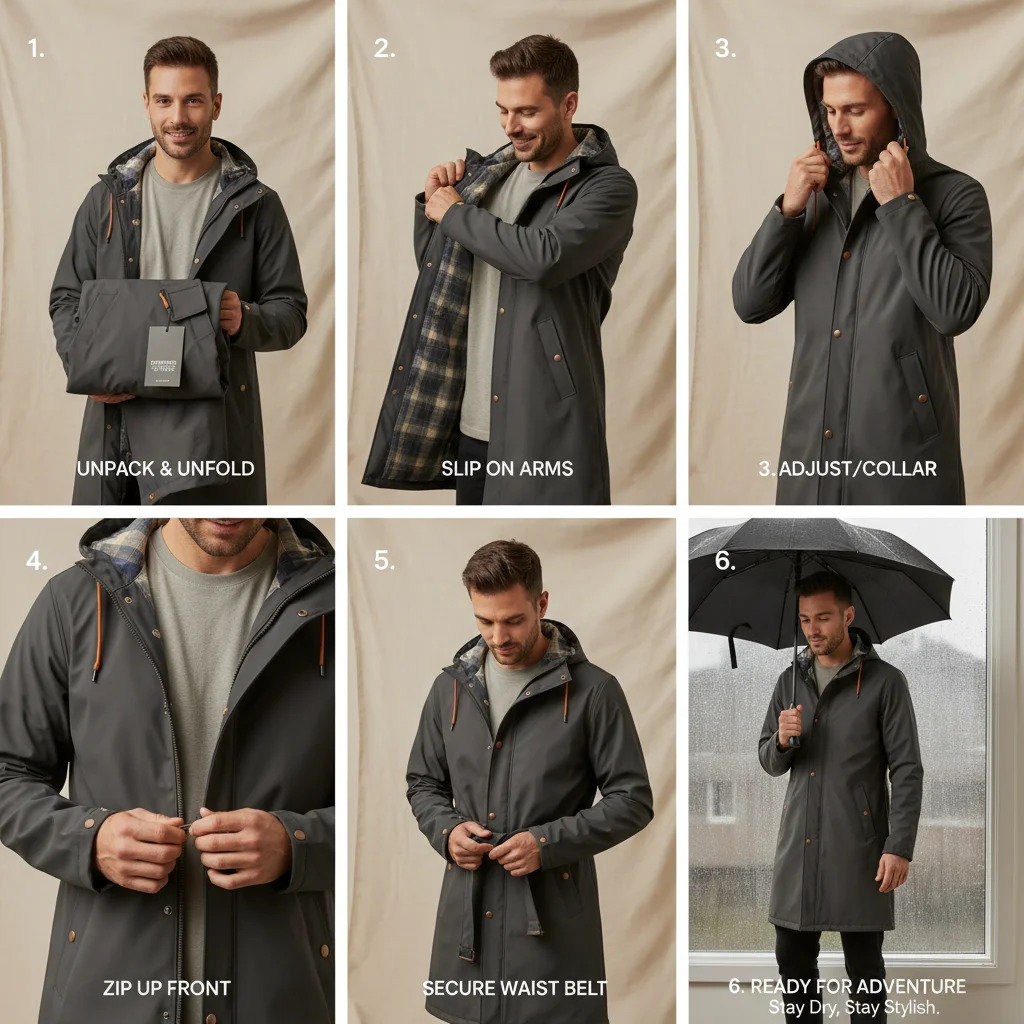
For brands seeking a unique market position, the ability of a factory to execute OEM and ODM services is paramount. This process begins with custom design blueprints—such as incorporating two-way zips, adjustable hoods, and integrated back vents for breathability—and transitions into mass production cycles.
Customization extends beyond the silhouette to brand identity. Professional factories offer screen printing and transfer printing for logos, ensuring that the branding is durable and resistant to peeling under wet conditions. The availability of free sample services (1-2 pieces) is a critical step in validating the design and material quality before committing to bulk MOQs, such as 800pcs per color.
Quality Assurance and Compliance Frameworks
Maintaining consistency across thousands of units requires a rigorous quality control (QC) infrastructure. Top-tier pu raincoat Factories employ a suite of testing tools, including hydrostatic testers for waterproof verification, tension testers for seam strength, and needle detector machines to ensure consumer safety.
Third-party verification from agencies such as SGS, BV, and ITS provides an unbiased audit of the production process. This multi-layered approach—internal testing combined with external audits—minimizes the risk of defective shipments and ensures that every garment meets the specified 8000mm water column and Oeko-Tex 100 standards.
Manufacturer Selection Decision Matrix
Choosing the right partner requires a qualitative and quantitative comparison. Buyers must evaluate whether a factory provides generic utility production or a fashion-forward, sustainable approach that adds value to the end-consumer.
| Feature Metric | Standard PU Factory | Premium PU Factory | Strategic Impact |
|---|---|---|---|
| Material Base | Virgin Polyester / PVC | Recycled Poly / PFC-Free | Eco-Compliance |
| Waterproof Level | Basic Coating | 8000mm Water Column | Extreme Protection |
| Seam Method | Stitched Seams | Advanced Welded Seams | Leak Prevention |
| Certification | Basic Factory License | BSCI, GRS, Oeko-Tex 100 | Market Access |
| Design Capability | Generic Patterns | Full OEM/ODM Service | Brand Differentiation |
| Product Lifespan | Short-term wear | Long-term durability | Customer Loyalty |
As indicated in the matrix, the transition from a standard to a premium manufacturer shifts the product from a commodity to a high-value asset, reducing long-term returns and increasing brand equity through sustainable practices.
Frequently Asked Questions
PU (Polyurethane) coatings are generally more flexible, breathable, and environmentally friendly than PVC (Polyvinyl Chloride). Premium PU options are often PFC-free and PVC-free, significantly reducing the ecological footprint compared to traditional plastic-based coatings.
A water column rating of 8000mm means the fabric can withstand significant water pressure before leaking. In practical terms, this keeps the wearer dry even during persistent and heavy rainfall, making it suitable for professional outdoor use.
Yes, professional factories provide full OEM and ODM services. This includes customized logos via screen or transfer printing and adjustments to patterns or sizes to fit specific market requirements.
Key certifications include Oeko-Tex Standard 100 for textile safety, GRS for recycled materials, and BSCI for social compliance and ethical manufacturing standards.
Depending on the complexity of the customization and the total order volume, the delivery lead time typically ranges from 30 to 90 days after the firm order is placed.
Stitched seams create small holes in the fabric that can leak over time. Welded seams fuse the PU material together using heat and pressure, creating a continuous waterproof barrier that is far more effective in heavy rain.
Conclusion
Establishing a partnership with the right pu raincoat Factories requires a deep understanding of the intersection between material science, environmental compliance, and production scalability. By prioritizing high water-column ratings, welded seam technology, and GRS/Oeko-Tex certifications, brands can ensure their rainwear collections deliver both high performance and sustainable value.
For procurement professionals evaluating implementation options for their next collection, detailed technical specifications and factory capabilities can be reviewed at www.jjpuraincoat.com to ensure alignment with brand quality standards.