The global demand for high-performance protective clothing has led to a significant evolution in how pu rainwear Factories operate, shifting from simple garment assembly to advanced material engineering. As unpredictable weather patterns become more frequent, the necessity for waterproof and windproof apparel that combines durability with fashion has never been higher, especially for the younger generation.
Modern manufacturing in the rainwear sector now emphasizes a balance between technical functionality and safety standards. Leading producers are integrating specialized coatings and welded seam technologies to ensure that water cannot penetrate the fabric, providing an essential barrier for children and adults engaging in outdoor activities regardless of the precipitation levels.
When sourcing high-quality gear, understanding the capabilities of professional pu rainwear Factories is crucial for brands looking to offer PFC-free, Oeko-Tex 100 certified products that prioritize both environmental sustainability and wearer safety.

Material Engineering in PU Rainwear
The foundation of high-quality rainwear lies in the synergy between the base fabric and the protective coating. Professional manufacturers utilize 100% polyester knitted fabric combined with a 100% polyurethane (PU) coating, typically ranging between 190-200gsm. This specific combination ensures that the garment remains lightweight and flexible while providing an absolute barrier against water and wind.
By mastering the application of PU coatings, pu rainwear Factories can create garments that are not only waterproof but also breathable enough for active use. This material engineering allows for a wide range of styles, from classic yellow jackets to complex digital all-over printing (AOP), without compromising the structural integrity of the waterproof layer.
Technical Specifications for Waterproofing
Achieving true waterproof status requires more than just a coated fabric; it demands precision in assembly. The most critical technical aspect is the use of welded seams. Unlike traditional stitching, which creates thousands of tiny holes where water can seep through, welding fuses the material together, ensuring that every joint is as waterproof as the fabric itself.
Further protection is integrated through thoughtful design elements such as the storm flap. By placing a practical flap over the front zipper, manufacturers prevent rain from penetrating the teeth of the zip. This dual-layer approach—combining welded seams with concealed 2-way front zips—is a hallmark of high-end production standards.
Additionally, the inclusion of adjustable waists and detachable hoods allows the garment to fit various body types and activity levels. These functional details ensure that the windproof and waterproof properties are maintained even when the wearer is moving vigorously, making the gear suitable for everything from theme parks to rainy school commutes.
Safety and Certification Standards
Safety is paramount when producing children's apparel. Top-tier pu rainwear Factories adhere to strict international certifications such as Oeko-Tex 100, which guarantees that the textiles are free from harmful substances. This is especially critical for PU materials, where the absence of PFCs (perfluorinated chemicals) ensures the product is safe for the skin and the environment.
To enhance visibility during gray, rainy days or low-light conditions, the integration of high-visibility reflectors is a standard safety requirement. These reflectors ensure that children remain visible to motorists, blending essential safety features with the aesthetic appeal of the jacket's digital printing.
Another critical safety feature is the detachable hood. By using a "click-off" or removable design, manufacturers prevent the risk of children getting the hood caught in equipment or playground structures. This commitment to safety, combined with non-toxic material sourcing, defines the operational excellence of modern pu rainwear Factories.
Production Efficiency and Scalability
Scaling production for rainwear requires a sophisticated balance of MOQ (Minimum Order Quantity) and customization capabilities. For instance, maintaining an MOQ of 800pcs per color allows factories to optimize material runs while offering the flexibility of OEM and ODM services, enabling brands to implement their own customized logos via screen or transfer printing.
The delivery cycle, typically ranging from 30 to 90 days, reflects the complex process of digital printing and seam welding. Efficient factories manage this timeline by streamlining the sample process—offering free samples for 1-2 pieces—to ensure the final product meets exact specifications before mass production begins.
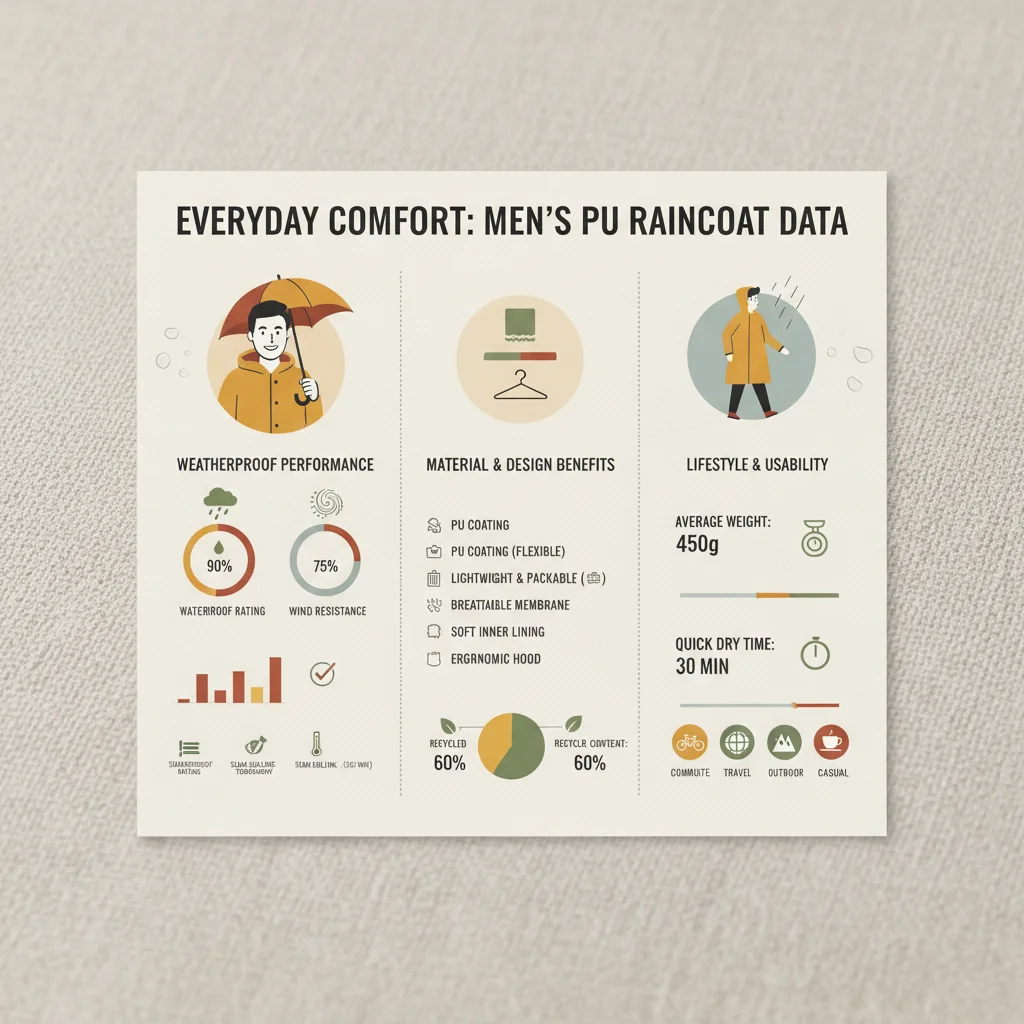
Performance Metrics of PU Rainwear Production Methods
Design Innovation for Junior Apparel
The shift toward "Fashion and Personalized" rain jackets has transformed the industry. By utilizing digital all-over printing (AOP), manufacturers can now offer a vast array of motifs and colors—from classic yellow to intricate patterns—ensuring that functional gear also meets the stylistic desires of teenagers and children.
Beyond aesthetics, innovation extends to garment architecture. The inclusion of two flap pockets with press studs and a hidden adjustable waist demonstrates a focus on user experience. This ensures that the jacket provides a tailored fit for sizes ranging from 128 to 164, making it a versatile choice for diverse age groups.
Global Supply Chain Applications
The output from pu rainwear Factories serves a diverse global market, ranging from urban retail chains to outdoor specialty stores. In regions with high annual rainfall, such as Northern Europe or Southeast Asia, the demand for PFC-free and Oeko-Tex certified rainwear is a critical market driver, as consumers prioritize health and environmental impact.
Furthermore, these products are essential for themed environments, such as outdoor parties or theme parks, where children require maximum protection without restricting movement. The ability to provide both lined versions for autumn/spring and unlined models for milder weather allows suppliers to maintain year-round relevance in the global market.
By offering custom OEM/ODM services, factories enable local brands to tailor products to specific cultural preferences or regional weather needs, ensuring that the final product is perfectly aligned with the end-user's environment.
Future Trends in Rainwear Manufacturing
The future of rainwear is moving toward a "circular economy" model. Leading pu rainwear Factories are exploring bio-based polyurethane alternatives to reduce reliance on petroleum-based plastics, while maintaining the 100% waterproof integrity that customers expect.
Digital transformation is also playing a key role. The integration of AI-driven demand forecasting and automated cutting systems is reducing fabric waste, while advanced digital printing technologies are allowing for even more complex, water-based inks that are more sustainable than traditional dyes.
As safety regulations evolve, we expect to see "smart" integration, such as embedded LED strips or enhanced reflective polymers that provide 360-degree visibility. This evolution ensures that rainwear continues to be a vital tool for safety and comfort in an ever-changing climate.
Comparative Analysis of Rainwear Material and Feature Standards
| Feature Category |
Standard PU Spec |
Advanced Factory Spec |
Benefit Level |
| Seam Construction |
Stitched/Taped |
Fully Welded |
Maximum Leak-Proof |
| Chemical Safety |
Standard PU |
PFC-Free/Oeko-Tex |
Skin-Safe/Eco-Friendly |
| Fabric Weight |
150-170gsm |
190-200gsm |
Enhanced Durability |
| Print Technology |
Solid Color |
Digital AOP |
High Personalization |
| Hood Design |
Fixed Hood |
Detachable/Adjustable |
Increased Safety |
| Closure System |
Simple Zip |
2-Way Zip + Storm Flap |
Wind/Water Barrier |
FAQS
Professional pu rainwear Factories utilize welded seams instead of simple stitching, which prevents water from leaking through the needle holes. Additionally, they use higher GSM fabrics (190-200gsm) and PFC-free materials that meet Oeko-Tex 100 standards, ensuring the garment is both durable and safe for children's skin, unlike low-cost alternatives that may contain harmful chemicals.
When produced by expert factories, digital AOP is applied in a way that does not compromise the polyurethane coating. The printing process is integrated with the material's properties, ensuring that the vibrant motifs and patterns remain waterproof and windproof without peeling or creating permeable areas in the fabric.
It is primarily a safety necessity. Detachable hoods prevent children from accidentally getting stuck in playground equipment or other objects. By allowing the hood to "click off," manufacturers prioritize the child's safety without sacrificing the protection provided by the wide-brimmed, adjustable hood during rain.
Typically, delivery takes between 30 to 90 days after a firm order is placed. This timeline accounts for the precision required in digital printing, the technical process of seam welding, and the strict quality control checks needed to ensure the garments are 100% waterproof and meet international safety certifications.
While the PU material is 100% windproof and waterproof, its warmth depends on the lining. Manufacturers offer both lined rain jackets for extra warmth during autumn and spring, and unlined models for milder conditions. For extreme cold, these jackets are best used as an outer shell over insulating layers.
The most reliable way is to request Oeko-Tex 100 certification. This independent certification confirms that every component of the garment, including the PU coating and dyes, has been tested for harmful substances and is safe for human use, confirming the factory's commitment to eco-friendly and health-conscious production.
Conclusion
The sophisticated production processes employed by modern pu rainwear Factories—ranging from the use of welded seams and PFC-free polyurethane to the integration of digital AOP and safety reflectors—ensure that children's rainwear is no longer just a utility, but a high-performance product. By prioritizing material engineering, international safety certifications, and wearer-centric design, these factories provide a solution that balances absolute waterproof protection with modern fashion and rigorous safety standards.
Looking forward, the industry's move toward bio-based materials and circular manufacturing will further enhance the sustainability of protective apparel. For brands and distributors, partnering with a manufacturer that understands the technical nuances of PU coating and the importance of Oeko-Tex certification is the key to delivering long-term value and safety to the end consumer. Visit our website for more professional solutions: www.jjpuraincoat.com